
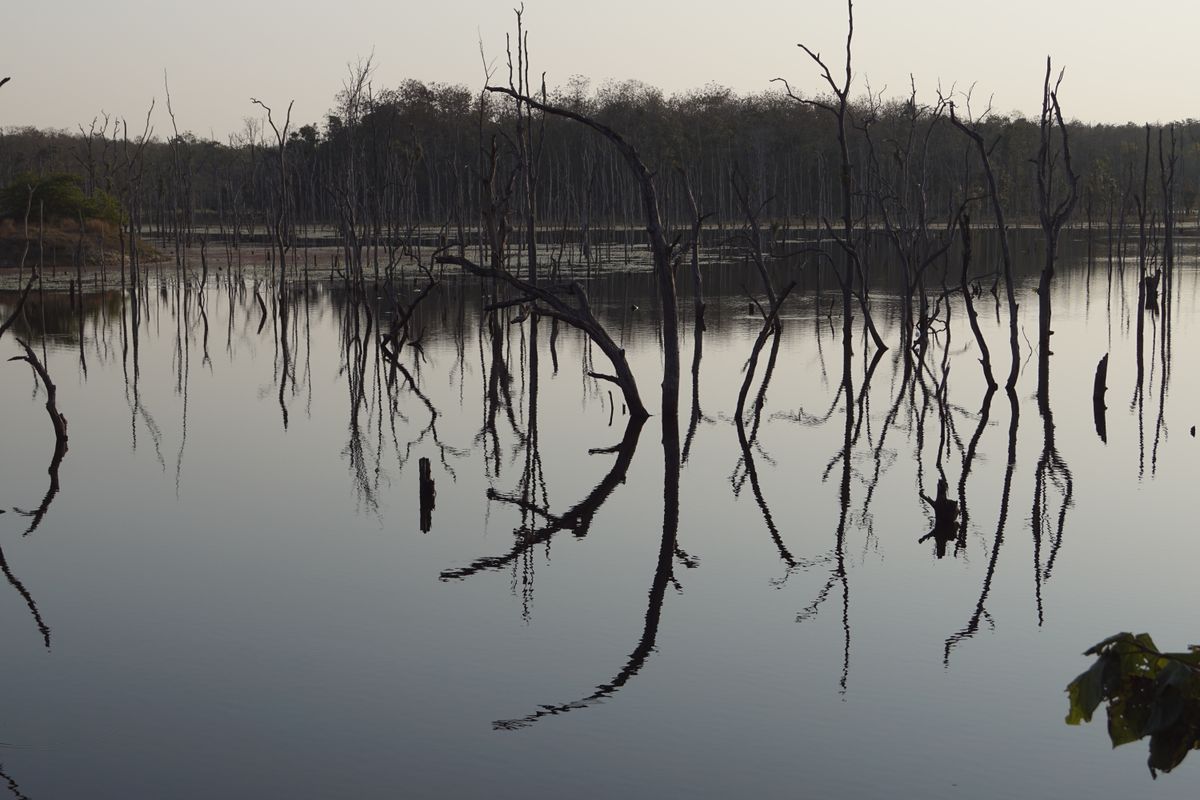
The upper Noosa River sits inside the Cooloola section of Great Sandy National Park, Queensland, under a name that surprises people: the Noosa Everglades. It is often described as one of only two everglades systems in the world. Tannins from the surrounding wallum heathland and paperbarks stain the water dark amber, and on a calm morning it holds a near-perfect reflection of sky and tree line. The colour, the stillness and the way the river narrows as it reaches into the park make this one of the more striking multi-day paddles in south-east Queensland.
The place
The Noosa River drains south into Lake Cootharaba and on to Noosa Heads. The Everglades section is the upper river above Cootharaba, where the channel narrows, the forest closes in and the tannin water becomes the whole character of the place. The catchment is broad, flat and slow. The current is gentle. National park lines both banks for most of the upper route. The mirror-water effect that draws photographers depends on stillness and low light. Go early.
The classic pattern
Most people reach the upper river from Boreen Point or Elanda Point on the western shore of Lake Cootharaba. From there the pattern is straightforward. Cross or skirt the lake, find the river mouth at the northern end, and paddle upstream into the park. Designated camping sites are spaced along the upper river. You camp, push further upstream the next day, then drift back out. The downstream return is the easy half. Current and downstream wind do most of the work.
Camping along the upper river is by permit through Queensland Parks and Wildlife Service. Sites are designated and must be booked ahead. Check QPWS for current site availability, permit costs and booking requirements before you lock in dates. Carry everything in and carry everything out. There are no facilities in the upper reaches.
Why upstream-then-drift works
The logic is simple. You put the effort in while you are fresh and the day is still early. The current on the upper Noosa is gentle enough that upstream travel is manageable rather than punishing, but it is still resistance. Get that leg done before any afternoon wind arrives and the whole trip is more comfortable. The return downstream is a different trip: the current helps, the river is familiar, and you have time to notice what you passed too fast on the way in.
The lake crossing
Lake Cootharaba is the threshold between the road and the river. It is a big, shallow lake, several kilometres of open water under open sky, and it builds wind chop faster than most people expect. A flat-calm crossing at dawn can be a short-chop crossing by noon. Small inflatables handle Cootharaba, but they need respect. Leave early, before the sea breeze arrives, or hug the western shoreline and add distance to stay out of the open middle.
The lake is not the goal. It is the entry toll. Getting across it cleanly means checking the Bureau of Meteorology forecast the night before, watching the morning conditions, and being willing to wait a day if the weather is wrong. Once you are on the upper river, Cootharaba is behind you and wind matters much less. The river is sheltered by its own banks and vegetation.
Heat, sun and water
Queensland sun on dark tannin water reflects heat in a way that catches people off guard. Light comes at you from above and off the water below. Full-brim hat, long-sleeved sun shirt, sunscreen on anything exposed: that is standard kit here. Paddle in a t-shirt on a summer day and you finish the trip with serious sunburn on your arms and neck.
Carry more water than you think you need. The tannin water is not drinkable without treatment, and there are no taps in the upper reaches. Summer afternoons build storm cells quickly. If a storm is building while you are on the open lake, get off the water and find shelter before it arrives. The cooler months, April through to September, are the preferred window. The sun is still strong but not punishing, and the storm risk drops right off.
Permits and care
Camping in the upper Noosa River section requires a permit through QPWS. Sites are designated and limited. Book ahead, especially in the cooler months when demand is high. Check QPWS for current fees, site availability and any conditions that apply during your visit. Informal camping is not permitted. Carry everything in and carry everything out. Grey water disposal and campfire restrictions apply: confirm the current rules before you leave.
Who it suits
The Noosa Everglades suit flat-water paddlers in the cooler months. If this is your first multi-day paddle, the gentle current and sheltered river are well within reach, provided you take the lake crossing seriously. Photographers and wildlife watchers do well here. Early light on tannin water rewards patience. It is not a trip for anyone after moving water or technical paddling. It is for anyone who wants a slow route through unbroken national park country.
Slow dark water, reached across a lake and paddled upstream, is comfortable territory for a Seeka Tourer.