
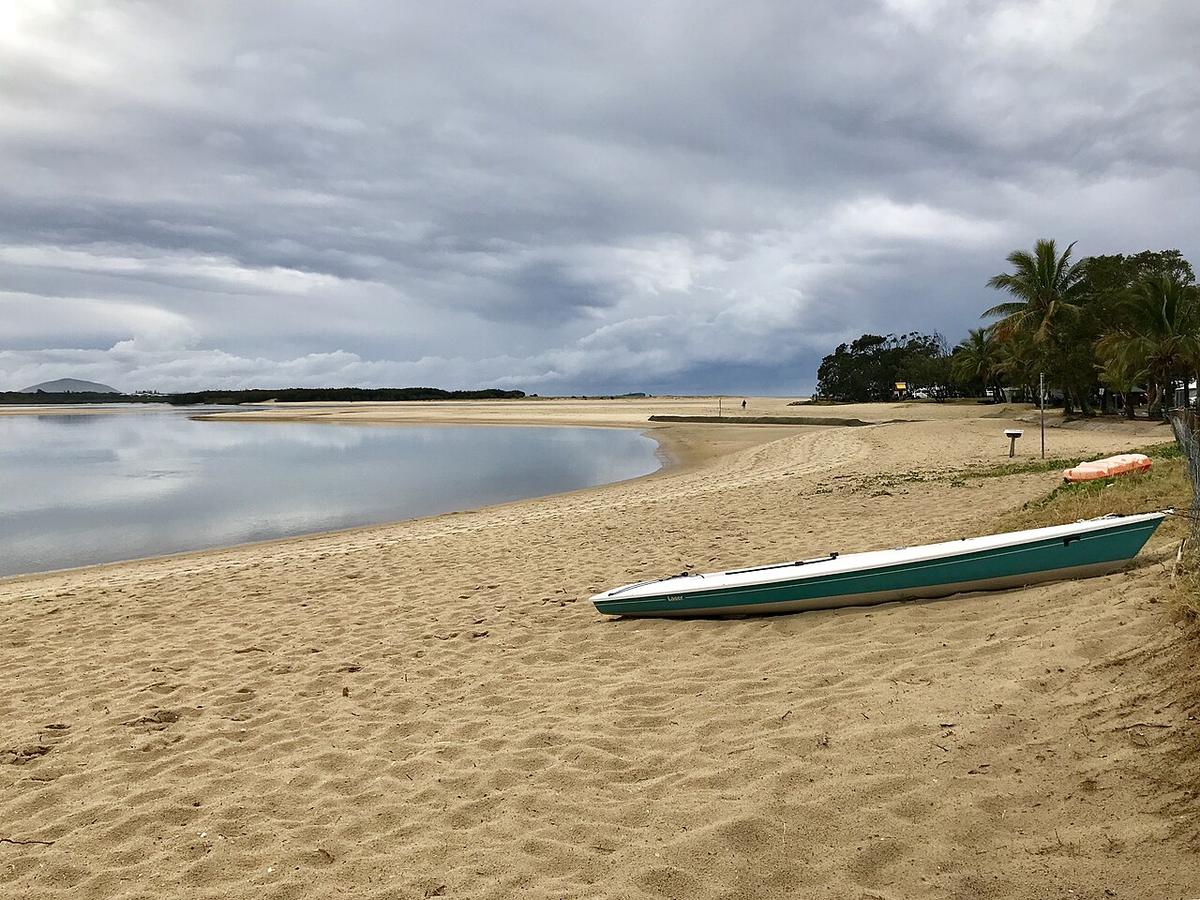
The Maroochy River drains the hinterland behind the Sunshine Coast, running from the ranges west of Yandina through cane country and mangroves to the sea at Maroochydore and Cotton Tree. For most of its lower length it is a tidal estuary, wide, shallow and slow.
It is an easy river to get to from the coast, and a short paddle upstream puts the beach crowds a long way behind you.
A tidal river with two moods
Near the mouth the Maroochy is sandy, open and exposed to the coast. Sandbanks shift, the channel moves, and the tide runs hard through the entrance. Further upstream the river narrows between mangroves and farmland and the pace drops right off.
Tide sets the whole day. Paddle upstream on the flood and come home on the ebb, and the river does half the work for you.
The upper tidal reaches
Around Bli Bli and above, the river winds through a mix of mangrove, casuarina and cleared cane land. Several creeks come in along the way, and there is a lot of calm water to explore at the top of the tide.
Go at high water if you want to poke into the side creeks. At low tide the edges turn to mud and some channels drain almost completely.
Keep clear of the mouth
The river mouth opens onto surf beaches. On a strong ebb the current can carry a small craft towards the bar faster than you can paddle against it.
Stay well inside the estuary, keep to the upstream side of the lower river on an outgoing tide, and leave the entrance to craft built for it.
Traffic, wind and sharks
The lower river is busy on weekends and holidays, with powered craft, jet skis, stand-up paddlers and people fishing. Keep to the edges and away from marked channels.
Sea breezes pick up through the middle of the day and blow straight up the lower river. Wind against an outgoing tide builds short chop across the wide reaches.
Sharks can be present in Queensland estuaries, particularly in murky water after rain. Avoid swimming in the river at dawn, dusk or when the water is discoloured.
Levels, rain and water quality
The catchment is small and responds quickly to heavy rain. After a big downpour the river runs brown, carries debris and can hold high bacteria levels for several days.
Check tide times before every trip, and look at recent rainfall and any water quality advice from Sunshine Coast Council before you go.
Access and practical notes
Public ramps, parks and reserves give access along the lower river and around Bli Bli. Upstream, much of the bank is private land or cane farms. Use public access points and ask before crossing private property.
Sunshine Coast Council manages the foreshore reserves and can tell you where launching and parking are allowed. Maritime Safety Queensland sets the on-water rules.
Wear a buoyancy vest, tell someone your plan, and set a time to call when you are off the water.
Where a Seeka fits
The upper tidal reaches and side creeks, timed with the tide on a calm morning, are what a Seeka is built for. Launch from a riverside park, ride the flood up, float home on the ebb. The river mouth, the bar and the open coast beyond are not.