
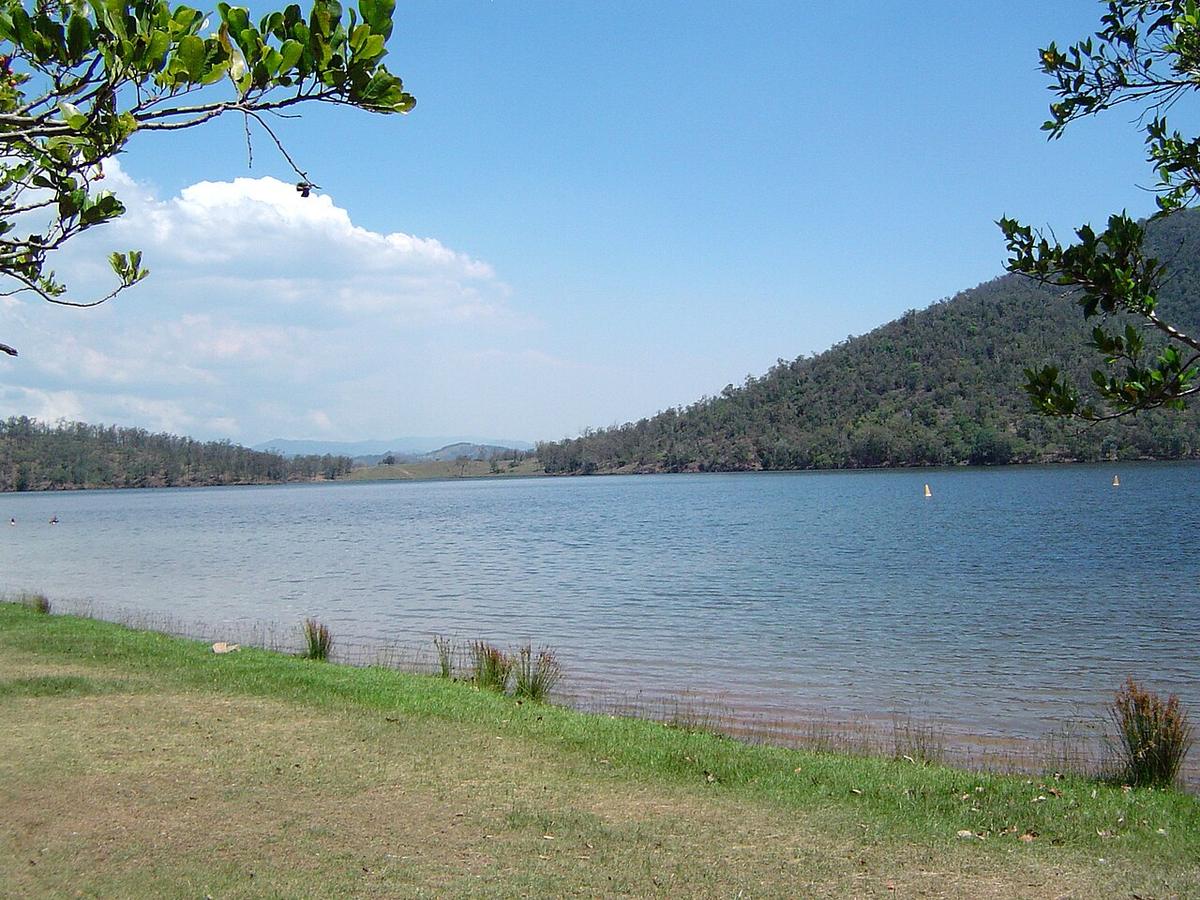
Lake Somerset is a large water storage on the Stanley River in the Somerset Region of south-east Queensland, about an hour and a half north-west of Brisbane. It sits upstream of Lake Wivenhoe, and the two dams work together for water supply and flood mitigation on the Brisbane River.
It is a long, branching lake with forested hills on both sides, and its recreation areas make it one of the easiest big lakes near Brisbane to get onto.
A lake built for floods
Somerset Dam was built across the Stanley River over the middle of the twentieth century. Seqwater now operates it, and the dam holds back floodwater as well as storing supply.
That means the lake level moves. After heavy rain it can rise quickly and then fall again as water is released downstream. Shorelines, launch points and the edge of the water shift with it.
Shores and bays
The lake winds between steep, timbered ridges, with long arms and small bays running back into the hills. The main body is broad and open. The arms are narrower and more sheltered, and they are where a small craft is happiest.
Seqwater runs recreation areas on the lake, including The Spit near the dam wall and Kirkleagh. These have picnic areas and easy access to the water.
Drowned trees still stand in the shallows of some arms, left from the valley before it was flooded. Treat them like snags. Keep your speed down near them, and more so when the level is high and the stumps sit just under the surface.
Wind and open water
The main body of the lake is wide enough for wind to build real chop, particularly in the afternoon. A breeze funnelling along the valley can turn a calm morning into a long paddle home.
Keep close to shore, avoid long open crossings, and plan your route so the wind brings you back rather than blows you out. Mornings are usually the calmest time.
Rules and conditions
Seqwater sets the rules for recreation on the lake, including which areas are open, where powered boats and water-skiers operate, and any restricted zones near the dam wall and intake structures. Stay well clear of the dam wall and any buoyed areas.
Seqwater also posts closures and water quality alerts, including blue-green algae warnings. Check its recreation page before you go, because conditions can change after rain or during flood operations.
Seasons and timing
Autumn, winter and spring bring the most comfortable paddling. Summer days are hot, and storms build in the afternoons over the ranges. Start early and carry more water than you think you need.
Check the Bureau of Meteorology forecast for wind and storms before you head out.
Practical notes
The lake is popular with anglers and powered boats on weekends and holidays. Stay visible, keep to the edges, and give trolling lines a wide berth.
Wear a buoyancy vest, tell someone your plan, and set a time to call when you are off the water.
Where a Seeka fits
The sheltered arms and bays of Lake Somerset on a calm morning are exactly the kind of water a Seeka is built for. Launch from a recreation area, follow the shoreline, and be back before the afternoon breeze. A windy day on the open lake is one to skip.