
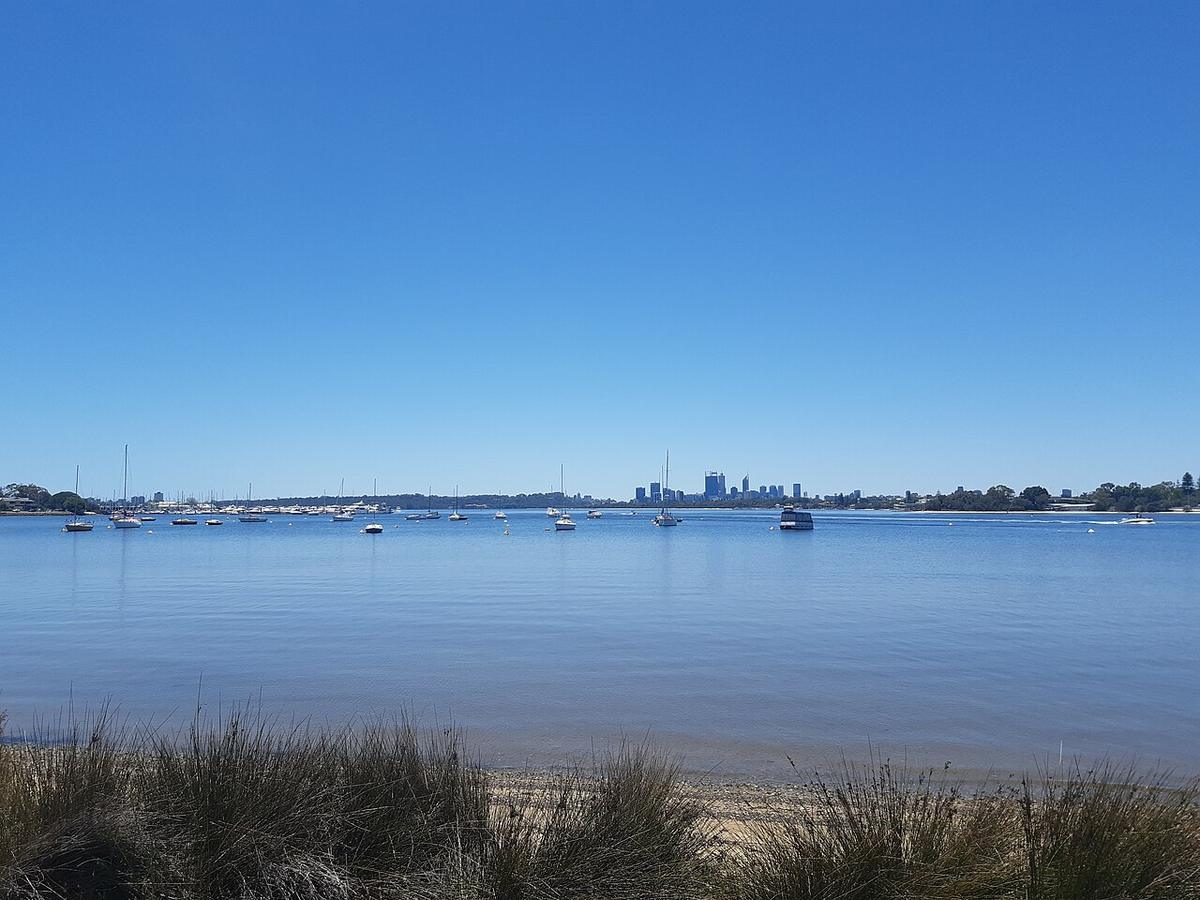
The Canning River runs out of the Darling Range east of Perth, down through the southern suburbs, and joins the Swan River at Canning Bridge before opening into Melville Water. Its lower half is a broad tidal estuary. Above Kent Street Weir it is a narrow, freshwater river lined with paperbarks and reeds.
It is part of the Swan Canning Riverpark, managed by the Department of Biodiversity, Conservation and Attractions (DBCA), and it gives Perth paddlers two very different days close to home.
Above the weir
Kent Street Weir separates the freshwater river above from the estuary below. Upstream, the Canning is small, winding and sheltered, with thick fringing vegetation and plenty of birdlife.
It is calm, easy water at normal levels, and it feels a long way from the suburbs around it. Fallen branches and snags do occur, so look ahead on the bends.
Treat the weir itself as a portage, and never paddle over or through it.
The estuary below
Below Kent Street Weir the river is tidal and gradually widens, running through the Canning River Regional Park and past Riverton, Shelley and Mount Pleasant to the Swan. The tidal range in the Swan and Canning is small, so wind matters more than tide here.
The shallows and sheltered bays suit a slow morning. The wide reaches near Canning Bridge and out into Melville Water are open, busy and exposed.
Wind is the main factor
Perth's afternoon sea breeze, the Fremantle Doctor, comes in hard through summer and blows across the open estuary. Short, steep chop builds quickly on Melville Water and the lower Canning.
Plan to be off the open water by late morning in summer, stay close to shore, and keep an eye on the forecast for wind shifts.
Sharing the estuary
The lower river is shared with powered craft, rowing crews, sailing clubs and ferries near the Swan. Keep clear of channels and moorings and be visible.
Algal blooms occur in the Canning, particularly in warm, still summer conditions. DBCA publishes algal bloom and water quality alerts for the Riverpark. Check before you go, and avoid contact with discoloured water.
Dolphins use the Swan Canning estuary, and bull sharks are recorded in the river system. Give wildlife space and avoid swimming in murky water.
Riverpark access and rules
Public parks, reserves and jetties give access all along the river. DBCA manages the Riverpark and sets rules for activities on and near the water. The Department of Transport sets boating rules, including speed limits and restricted areas.
The City of Canning, the City of Melville and other local councils manage many of the foreshore reserves and can tell you about parking and launching.
Wear a buoyancy vest, tell someone your plan, and set a time to call when you are off the water.
Where a Seeka fits
The freshwater river above Kent Street Weir, and the sheltered estuary shallows on a calm morning, are good Seeka water. Catch a train or ride to the river, launch from a park and paddle. Melville Water in the afternoon sea breeze is not.