
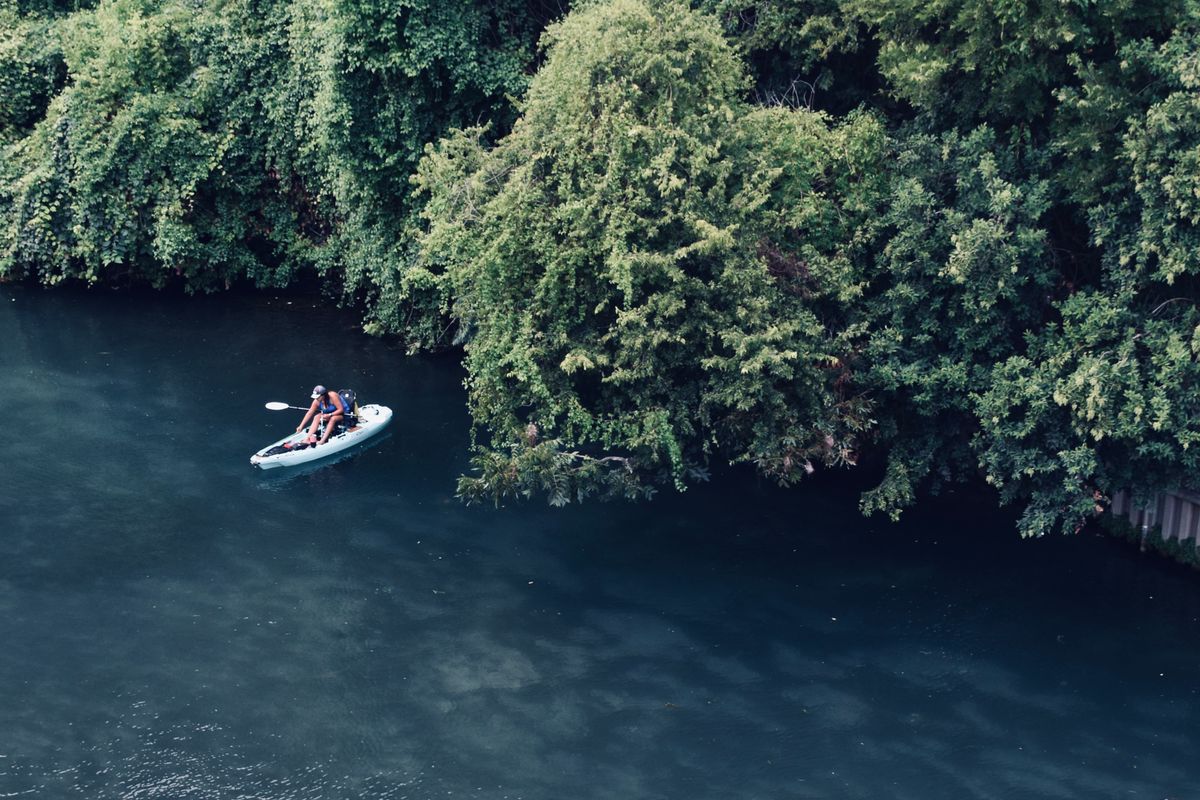
The Yarra runs through Melbourne's suburbs for most of its length. It is not a wilderness river, and that is the whole point. When the hull packs into a backpack, a suburban river becomes a weeknight option. Finish work, catch a train to a riverside suburb, walk to the bank, and you are on the water before dark. That is a different kind of access to the outdoors, and the Yarra makes the case for it.
The after-work logic
Most paddling needs a car, a trailer, a full day and a shuttle. The Yarra needs none of that if you carry your packraft. The middle reaches around Warrandyte, Templestowe and Fairfield are all reachable by train or bike, and none of them is far from the CBD. That access is what makes the Yarra a useful paddling river, not just a scenic one.
A packraft deflates and rolls into a pack small enough for a locker. The paddle breaks down. Nothing about the kit is awkward on public transport. The trip becomes a Tuesday possibility, not a weekend project.
Two characters, two kinds of day
The Yarra behaves differently depending on where you put in. The leafy middle reaches around Warrandyte and Templestowe give you moving water, wooded banks, and a sense of being further from the city than you are. The river bends and the canopy closes in. Current does some of the work. These reaches suit an afternoon float.
The lower urban reaches, closer to Richmond and Abbotsford, are flat and wide. Rowing clubs use them. The banks are built up. The water is still, and the pace is yours entirely. Both characters have their days. The lower river suits early mornings when the water is glassy and the city is quiet. The middle reaches suit anyone who wants a bit of flow under the hull.
Hazards that matter here
Urban rivers collect debris from the catchment above them. After floods, submerged snags and sweepers build up in ways you cannot see from the surface. Keep your eyes ahead and hold the inside of bends, where the current runs slower and is less likely to push you into the timber that collects on the outside.
Weirs are the most serious hazard on the Yarra. Portage every weir. Do not attempt to run them. Dights Falls near Abbotsford is the best known: a weir that looks approachable from upstream and is not. Carry your packraft around it on the bank. The rule applies to every weir, not just the famous one. If you see a horizon line forming across the full width of the river, stop well upstream, scout from the bank, and portage.
Winter water on the Yarra is cold. A swim drains heat faster than most people expect. Wear your PFD on every paddle, regardless of conditions. A float plan left with someone onshore costs nothing.
Water quality
The Yarra's water quality is variable and rain-dependent. The catchment drains farmland and urban surfaces. After heavy rain, runoff carries bacteria and debris into the river at higher concentrations. The general rule is to stay off the water for at least a day or two after significant rainfall.
EPA Victoria publishes water quality advisories and monitoring data for the Yarra. Check current advisories before you go, particularly in the warmer months when bacterial counts are more likely to be flagged. If you capsize or take on water, follow standard hygiene precautions. The river is paddleable in good conditions. Bring the same common sense you would to any urban waterway.
Etiquette and access
Public access points exist along the Yarra through the middle and lower reaches. Check Parks Victoria and your local council for current access information before you settle on a launch spot. Access conditions change seasonally and after infrastructure works.
The lower river carries heavy rowing traffic in the early morning. Give rowing shells a wide berth. They move fast, they cannot change course easily, and their crews have limited view of what is ahead of them. Keep to the sides of the channel when you share water with rowers.
Platypus live in the stiller stretches of the middle reaches. They are active around dawn and dusk. Give them distance and do not approach. They are not often seen, and a paddle that holds back when one surfaces is the right response.
Who the Yarra suits
The Yarra is not the river for paddlers chasing wilderness. The suburbs are right there. The coffee shops are a short walk from the water. For some paddlers that is no compromise at all. It is the attraction.
The river suits people who want to paddle often rather than occasionally. A long weekend on a remote river is a different kind of paddling to a Tuesday afternoon on the Yarra, and both are worth having. The Yarra's value is in frequency. You get to know a stretch of river across all seasons, in different conditions, at different times of day, simply because it is close enough to use often.
A river you can reach by train is exactly the situation a packraft in a pack was made for.