
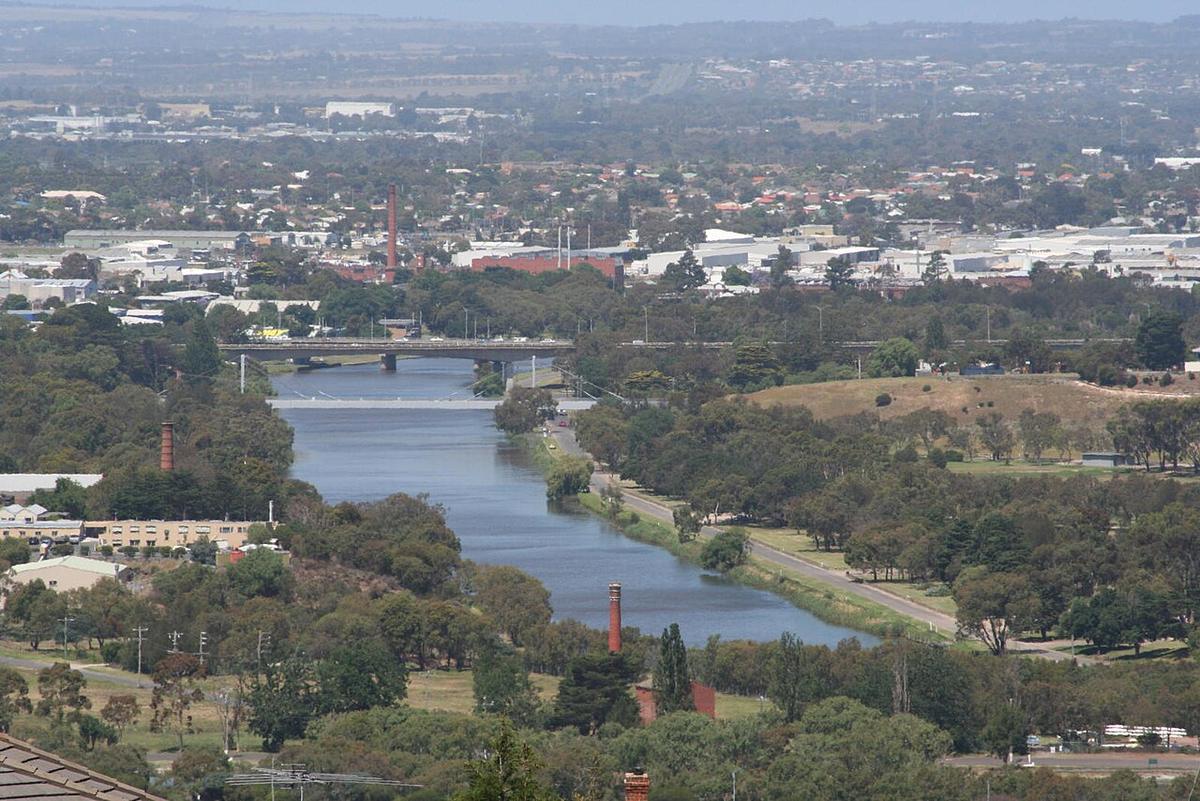
The Barwon River rises in the Otway Ranges, runs north and east through farmland past Winchelsea, winds through Geelong, then turns south through wetlands and Lake Connewarre to meet Bass Strait at Barwon Heads. It is a city river, a wetland river and a tidal estuary within a short drive of each other.
For packrafting, that makes it a river of reaches. You pick the one that suits the day and leave the rest.
A river through the city
Through Geelong the Barwon is broad and slow, held up by the barrage downstream of the city. Walking and cycling paths follow both banks for long stretches, and there are parks, rowing clubs and road bridges all along the way.
That makes it easy to reach and easy to plan. Paddle upstream against a gentle current, turn, and drift back. Or leave a bike at the far end and ride the path home.
Upstream towards Fyansford, where the Moorabool River comes in, the valley narrows and the banks get steeper. Buckley Falls sits in this stretch. Treat the rocky sections and any falls as portages, not features.
The estuary below the barrage
Below the barrage the river is tidal. It runs out through saltmarsh and the Lake Connewarre wetlands, a large shallow system with extensive birdlife, before narrowing again towards Barwon Heads.
Shallow water here means mud flats appear quickly on a falling tide. Plan around the tide times, not just the weather, so you are not left dragging your packraft across the flats.
Keep off the mouth
The river mouth at Barwon Heads is strong tidal water. The whole estuary drains and fills through a narrow gap, and the current through the entrance and under the bridge is fast enough to carry a small craft out to sea.
Paddle the estuary well inside the heads, and stay clear of the entrance and the bridge channel altogether. Open coast beyond it is no place for a packraft.
Levels, tides and wind
Upstream of Geelong the Barwon rises after rain in the Otways and the plains. After a wet spell the current picks up, the water browns, and debris comes down. Check gauge data and recent rainfall before you go.
In the estuary, tide matters more than river flow. A south westerly across Lake Connewarre builds chop fast on shallow water, so mornings are usually the better window.
Practical notes
The city reach is shared with rowers, who move fast and face backwards. Keep to the edges, keep a lookout, and give training crews room.
Water quality in urban rivers drops after heavy rain. Check the latest advice from EPA Victoria and the City of Greater Geelong before paddling, and avoid immersion after a storm.
Parts of the lower river and the wetlands sit inside reserves with their own rules for access, dogs and wildlife. Check with Parks Victoria and the local council before you launch.
Wear a PFD, tell someone your plan, and set a time to call when you are off the water.
Where a Seeka fits
The Geelong reach and the sheltered estuary on a calm morning are exactly what a Seeka is built for. Launch from the bank, paddle, roll it up, and catch a coffee by the river. The mouth, the bar and the open coast beyond are not.