
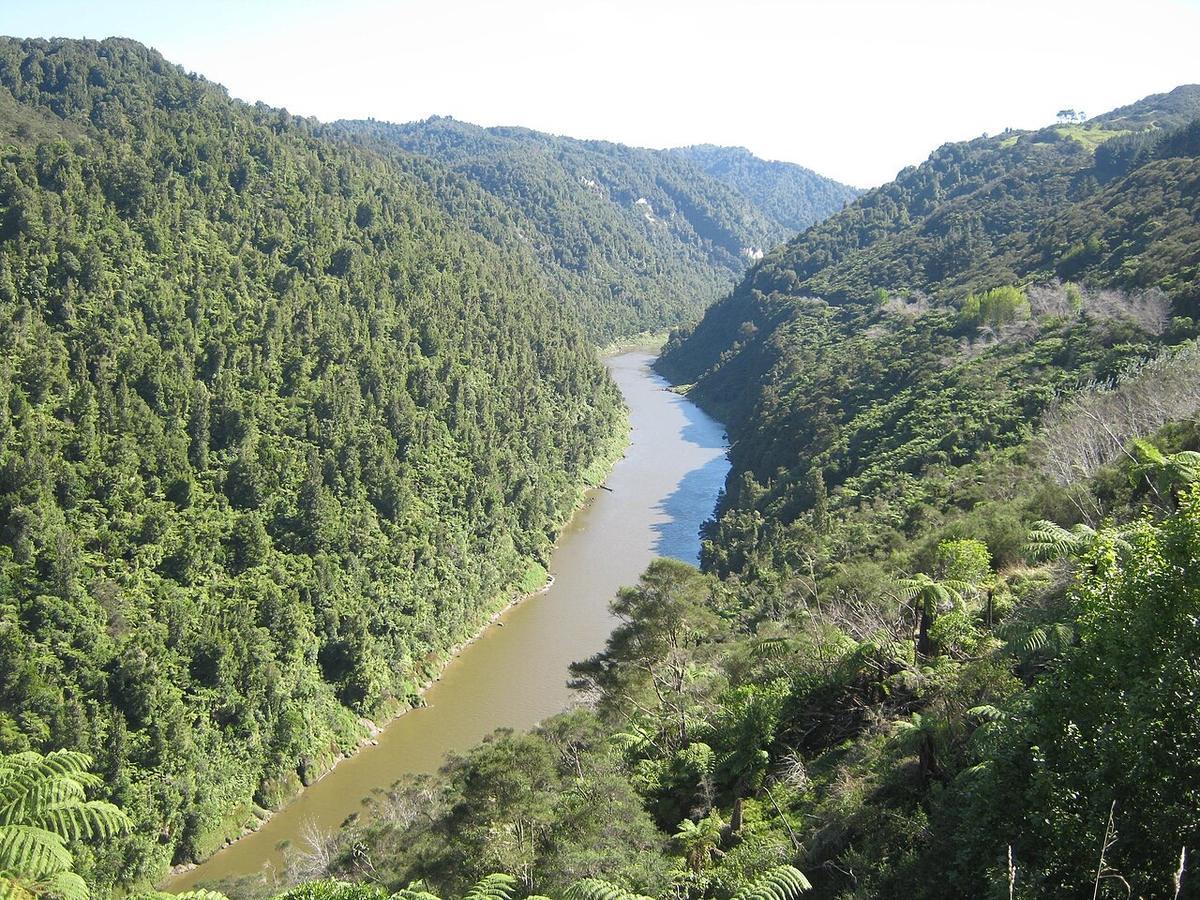
The Whanganui Journey is one of New Zealand's Great Walks, and it is not a walk at all. You travel the Whanganui River by paddle, through Whanganui National Park on the North Island, across several days of green gorge, mist and continuously moving water. The DOC hut and campsite network along the river gives the trip structure without stripping out the wilderness. Few multi-day river journeys anywhere are this carefully managed and this convincingly remote.
A river with legal standing
In 2017 the Whanganui River was granted legal personhood under New Zealand law. It became Te Awa Tupua, the river as an indivisible whole from the mountains to the sea. That status reflects the relationship between the river and Whanganui iwi, a relationship spanning centuries of whakapapa and cultural identity.
This matters when you paddle it. The river is not simply a recreational corridor. Travel it as a guest. Follow the rules, treat the water and the land around it with care, and understand that the river's significance goes well beyond anything a trip guide can hold.
The classic route
Most parties put in at Taumarunui or Whakahoro and take out at Pipiriki. Distance and pace depend on where you start and how many days you want on the water. The section from Whakahoro is shorter and suits paddlers with less time. Check DOC's website for current route options, distances and recommended day counts before you plan.
Huts and campsites along the river are booked through DOC. In the main season bookings are required and they fill early. Do not arrive assuming a bed is waiting. Check current fees and availability directly with DOC, because both change between seasons.
Canoe hire and shuttle operators have serviced this river for decades. They know the water and the logistics. On a first trip, using a local operator for the canoe and shuttles is a sensible call. A packraft changes that equation. It packs into a duffel and flies with you. No hire pickup, no return shuttle for the craft, no extra cost at the operator end. On a trip you are flying to from Australia, that simplicity counts.
The water, plainly
The Whanganui is mostly moving flat water. It has current. It has many small rapids. Those rapids are graded to suit most paddlers, but open canoes swamp in them regularly and with little warning. Capsize is common on this river, even for people who consider themselves competent.
A self-bailing packraft handles those rapids differently. Water that comes over the tubes drains out through the floor instead of pooling. That changes the recovery equation considerably. The capsize risk does not disappear. You can still go over in a fast channel or against a strainer. But you do not fill and sink in a rapid the way an open canoe does.
Rain changes the Whanganui fast. The catchment is large and the river rises quickly. DOC and local operators cancel trips at certain flow levels, and that is not overcaution. A river that is manageable at normal flows can become seriously dangerous after heavy rain upstream. Check river levels. Check the forecast. Have a plan for conditions shifting while you are on the water.
The water is cold outside high summer, and thermal protection is essential. A capsize in cold water without insulation under your shell gear is a serious event.
Planning from Australia
The flight to New Zealand is short and packrafts travel as checked luggage without issue. Pack the deflated packraft in a duffel with your camping gear and paddle shaft. Most people travelling from Australia bring everything they need.
Book DOC huts early. The Whanganui Journey is popular and the main season runs from roughly October through April. Huts fill months ahead. If you are aiming for the peak school holiday period, book the day bookings open. DOC publishes current booking windows on its website.
You do not need a guided trip on this river. It is well signed and the route is straightforward. Even so, a local operator briefing is worth having your first time. Flow information, put-in logistics and any current hazards are things an operator can update you on in a ten-minute conversation that no trip guide can replicate.
Who this river suits
The Whanganui Journey suits paddlers who want a multi-day river trip with a real wilderness feel, a managed hut network, and water that is mostly within reach of a fit beginner who takes it seriously. At normal flows it is not technically demanding. It does ask for attention, basic paddling competence, and respect for what the river can do in flood.
It fits someone who wants more than a lake paddle and less than an expert-only expedition. The DOC infrastructure means you are not carrying ten days of food into total wilderness. The national park setting means you are not paddling past farmland. That combination is rare.
A self-bailing Seeka is built for the flat reaches at sensible flows. Walk around anything white.