
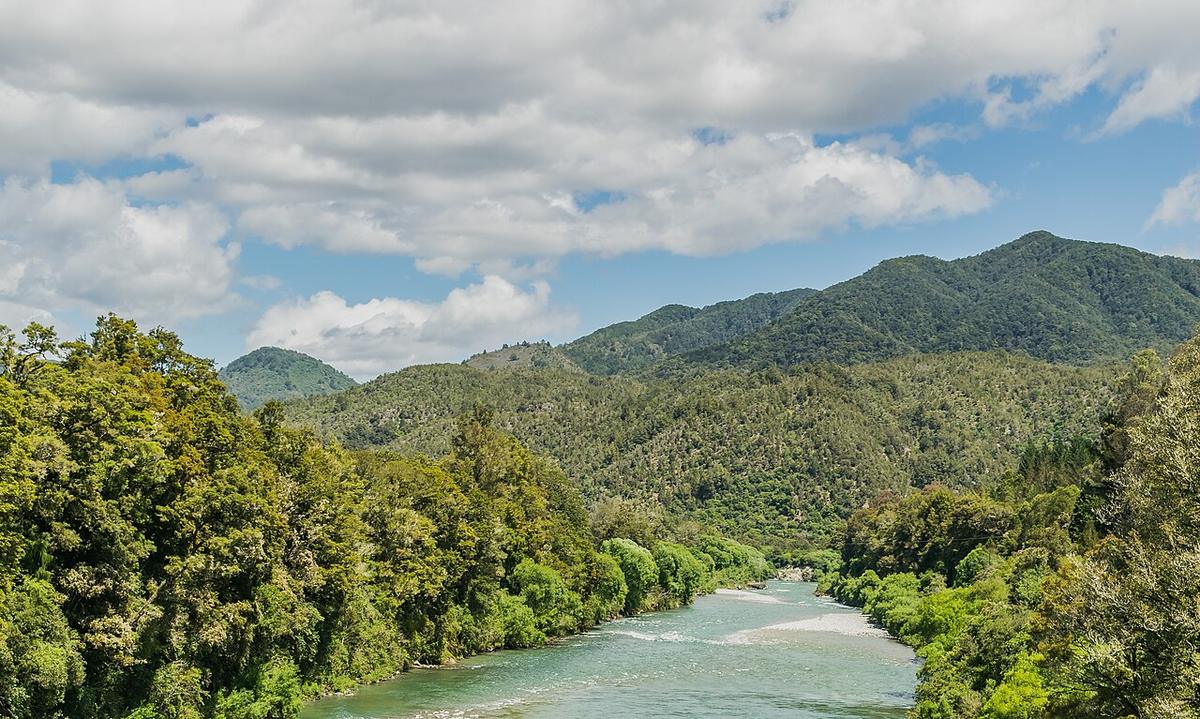
The Buller River, Kawatiri, flows out of Lake Rotoiti in Nelson Lakes National Park and runs west past Murchison, through the Buller Gorge, to the Tasman Sea at Westport. It is one of the South Island's best-known whitewater rivers, and Murchison sits at the centre of a whole network of rivers paddled by kayakers and rafters.
Most of the Buller is whitewater. This guide is about the gentler water at either end, and about being clear on where a packraft built for calmer water belongs.
A whitewater river
Through the Murchison area and the gorge, the Buller runs fast and powerful with rapids, boulder gardens and big-volume features. Commercial rafting and jet boat trips work the gorge, and it is well paddled by experienced whitewater crews.
A Seeka is not for these rapids. If you want to paddle the Buller's whitewater, it calls for whitewater skills, a whitewater craft, and local knowledge. Go with an experienced group or a commercial trip.
Lake Rotoiti at the head
The river begins at Lake Rotoiti, a mountain lake beside St Arnaud in Nelson Lakes National Park. The lake is flat water surrounded by beech forest, and it is where the Buller story starts for most packrafters.
The lake is cold year round and exposed to wind that can funnel down the valley in the afternoon. Keep to the shoreline and plan to be off the water early. DOC manages the park, so check with DOC for current access, facilities and any restrictions.
The lower river near Westport
Below the gorge the Buller broadens and slows through the coastal plain, becoming tidal as it approaches Westport. On a settled day with normal flow, the edges of the lower river can suit flat-water paddling.
The river mouth and the bar at Westport are dangerous and not packraft water. Stay well upstream of them, and never let an outgoing tide carry you towards the sea.
Rain and rising water
The West Coast gets a lot of rain, and the Buller catchment responds quickly. The river can rise a long way within hours, turning even gentle reaches brown, fast and full of debris.
Check the forecast and river flows before you go, and change plans without hesitation if rain is coming. The Tasman District Council and West Coast Regional Council publish river flow information for their areas.
Practical notes
Didymo, an invasive freshwater alga, is present in South Island rivers. Check, clean and dry your packraft, paddle and gear every time you move between waterways. Every New Zealand water user is asked to do it, and it protects the rivers you came to paddle.
Sandflies are a feature of the region. Pack repellent and long sleeves. Mobile coverage is patchy through the gorge and the upper valley.
Wear a buoyancy vest, leave your trip intentions with someone, and set a time to check in when you are off the water.
Where a Seeka fits
Lake Rotoiti at the head of the river, and the sheltered edges of the broad lower river on a settled day, suit a Seeka. The rapids around Murchison, the Buller Gorge and the river mouth at Westport are not what a Seeka is built for.