
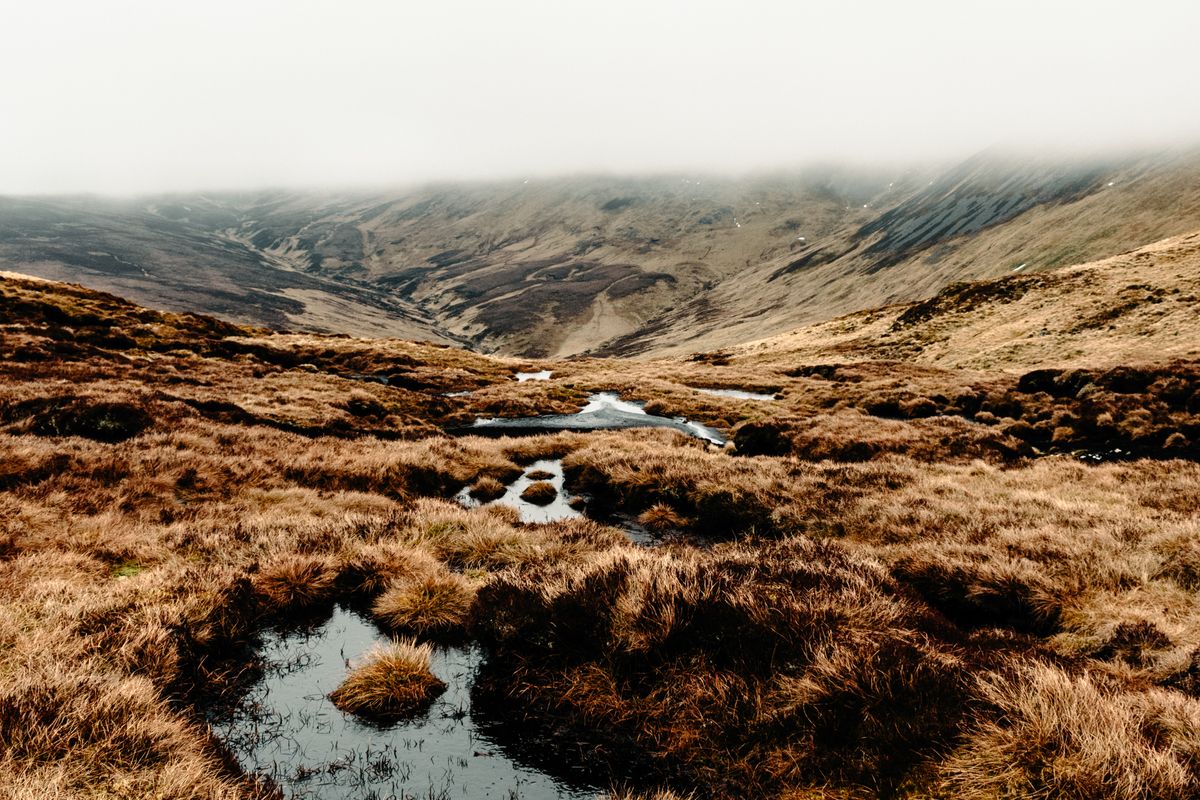
The Western Lakes sit high on Tasmania's Central Plateau, reached by unsealed roads and then on foot. Thousands of tarns scatter across open moor and dolerite country inside the Tasmanian Wilderness World Heritage Area, loosely grouped under names like the Nineteen Lagoons. Up there you find water in every direction, linked by short cross-country carries, with no fixed trails threading the whole of it. A packraft belongs here in a way few other craft do.
The country
The Central Plateau is high, flat and exposed. The tarns range from small and shallow to large enough that crossing one takes real time. Many sit close together. The moor between them looks simple on a map and is rough underfoot: tussock, wet ground and loose dolerite. Views run long in clear weather. In bad weather the plateau shrinks to the ground around your feet.
The whole area lies within the Tasmanian Wilderness World Heritage Area. That status shapes what you can do, where you can camp and how you move through the country. Check Parks Tasmania before you plan any trip here.
Why a packraft fits this water
Most tarns on the Central Plateau are out of reach for anything that needs a trailer. The water does not connect to a navigable river. Getting there means walking in with everything you need. A packraft solves that. It rides in your pack on the walk in and goes on the water at the lake edge.
The carry between tarns is often short. Paddle one lake, roll the packraft, walk a short way, paddle the next. A packraft turns a walk-only loop into a network. You reach far banks and fishing flats that shore walkers cannot. The terrain decides the route, and the packraft gives you options the terrain would otherwise refuse.
The fishing
The Western Lakes are among Australia's most respected wild brown trout waters. Polaroiding, spotting fish in clear shallow water before you cast to them, is the dominant style. The tarns are generally clear and the fish show well in good light.
A packraft is quiet. You can approach a flat or a weedy bay without the disturbance a wading approach makes. You reach angles a shore angler cannot. None of that replaces casting skill or reading the water, but in the right hands the packraft is a useful tool.
Fishing in Tasmania requires a licence. The rules for this water, including any catch-and-release requirements, season dates and other conditions, are set by the Inland Fisheries Service. Check directly with the Inland Fisheries Service before you fish. Do not rely on secondhand information for the specifics.
The weather
The Central Plateau gets serious weather in any month. Conditions change within the hour. A clear morning can turn to low cloud, rain and wind before midday, and the plateau offers almost no shelter.
Wind is a real hazard on open water. A tarn that looks paddleable can throw up steep, short chop in minutes when a westerly picks up. Be willing to sit out conditions on shore, or walk when paddling is not safe. Build weather days into the plan. Do not treat the paddling as the guaranteed part of the trip.
Cold water is a constant. Immersion on the plateau, even in summer, is a real emergency, so dress for the water rather than the air. A short swim from a capsized packraft turns serious fast at altitude in wind.
Navigation and self-sufficiency
In poor visibility the Western Lakes plateau is difficult country. The tarns look alike. The moor between them has no landmarks that stand out. A whiteout or heavy rain strips your reference points in minutes.
Carry a map and compass and know how to use them without a phone. GPS helps, but it is no substitute for map literacy when so many tarns look identical from above. There is no mobile coverage across most of the plateau. Tell someone your route, entry point and planned return. If you do not check in on time, they need enough detail to direct a search.
This is not country for a first wilderness trip. Come with navigation experience, the fitness to walk out in bad conditions, and the gear to be self-sufficient for longer than your plan requires.
Access, camping and care
Access and camping in this World Heritage Area are managed by Parks Tasmania. Entry requirements, camping zones and fees can change. Check Parks Tasmania directly. Older trip reports are not the current rules.
The plateau shows every mark, from footprints on wet soil to fire scars on dolerite. Camp on durable surfaces, carry a stove rather than lighting fires, and follow Leave No Trace principles. This country recovers slowly, and visitor numbers are not small.
Who this trip suits
The Western Lakes suit experienced walkers first. You need to navigate off-track in changeable weather, carry a multi-day pack over rough ground and look after yourself in a truly remote area without outside help. The packraft adds capability on the water. It takes nothing away from what the walking demands.
For anglers with Central Plateau experience, a packraft opens water unreachable on foot. For walkers who want to cross the plateau differently, it adds a dimension the walking alone cannot give. For anyone new to remote navigation or multi-day wilderness travel, this is not the place to start.
A Seeka Solo or Tourer is a calm-water packraft, and the tarns of the Western Lakes are calm-water country at its most remote.