
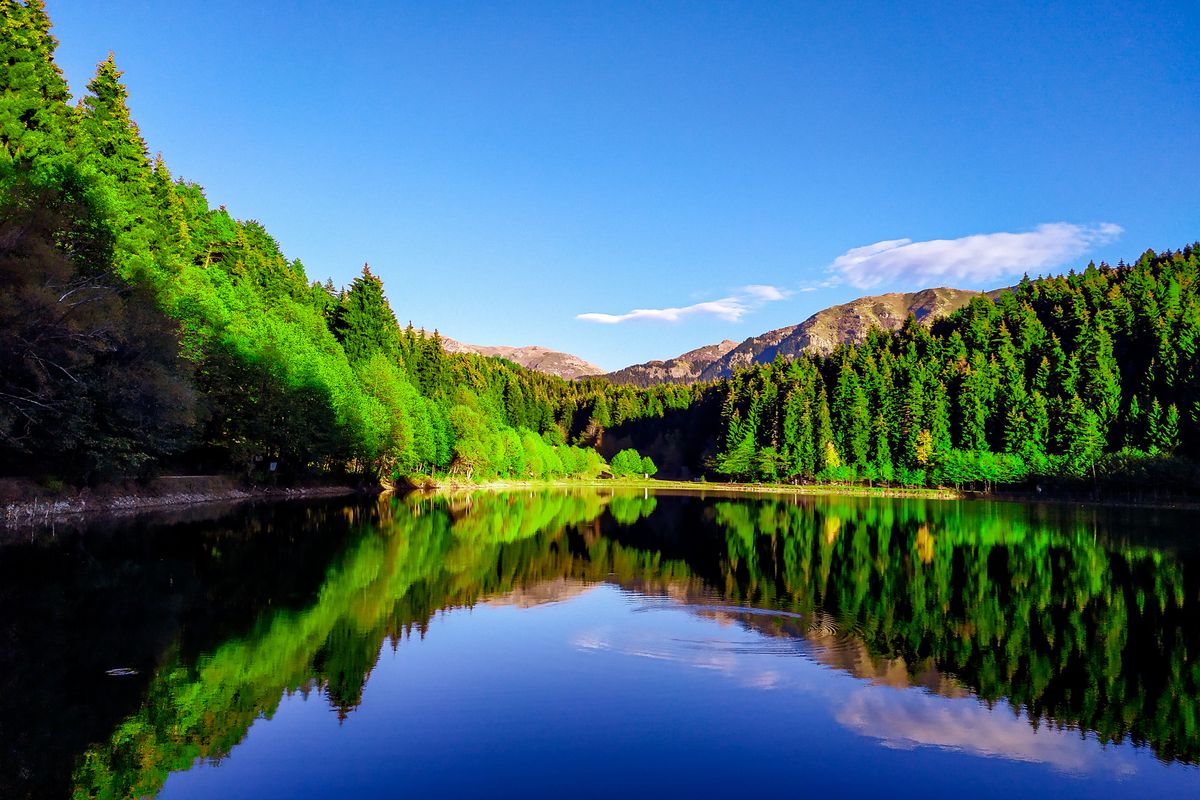
Lake St Clair sits at the southern end of the Overland Track in Cradle Mountain-Lake St Clair National Park. It is Australia's deepest lake, carved by glaciation, and it holds cold water year-round. Forested shores rise to mountain ridgelines. For walkers finishing the Overland Track, Cynthia Bay is the end. For paddlers, it is the start of a different kind of time on the water, time the lake gives slowly and on its own terms.
The lake itself
The glacial basin that shaped Lake St Clair carved out depth well past what the surface suggests. The water shifts colour with light and weather, dark and still in the early morning, grey-green when the wind gets up. The forested shoreline is undeveloped along most of its length. No roads trace the edges. The visitor hub at Cynthia Bay is the main access point, with a ranger station, a small ferry service and basic facilities.
The ferry runs for Overland Track walkers finishing at Narcissus Bay at the northern end. It is a working service, not a scenic cruise. Most people who arrive at Cynthia Bay have walked in from the north. A few drive in from the south. Either way, the lake is the conclusion.
Why a packraft suits this water
A walker arriving at Cynthia Bay already carries a pack. Add a packraft to that kit and the walking destination gains a water dimension. No car-top craft, no trailer, no second vehicle at a put-in. The packraft rolls back into the bag it came in and goes where you go.
The shoreline from Cynthia Bay rewards slow travel. The lake is long and the forest comes right to the water's edge. From a packraft, the scale of the surrounding country reads differently than it does from shore. The lake is wide enough to feel remote from the middle, and calm enough on a good morning to travel the edges at an easy pace.
This is flat-water territory. No rapids, no surf zones, no moving water to read. The challenge is environmental, not technical. That distinction matters when you choose the craft.
Cold water, always
Lake St Clair is glacially deep. The water temperature does not follow the seasons the way a shallow river does. Even in summer, going in carries real risk. A capsize in the middle of the lake, away from shore, is a serious situation at any time of year.
Dress for the water temperature, not the air. Wear a PFD every time. Stay close to shore, where the swim to safety is a distance you can manage. The lake rewards caution. It does not forgive the assumption that a calm surface means safe conditions.
Cold shock hits the body fast. Swimming ability drops quickly in cold water, even for strong swimmers. That is not a reason to skip the lake. It is a reason to plan every paddle with the swim in mind before you launch.
Wind and highland weather
The weather at Lake St Clair changes without much warning. The lake sits inside a highland national park in Tasmania's Central Highlands, one of the wettest and most changeable climates on the continent. A clear morning can turn into a hard afternoon.
Wind builds chop quickly on a long lake. Serious chop on cold water is hard to manage in any small craft. Mornings are generally the calmer part of the day. Start early and be off the water before the afternoon wind arrives. When you see wind lines moving across the surface, that is your signal to head for shore.
Check the forecast before you go out. Read the lake when you arrive. If either gives you pause, wait, or stay close in.
Practicalities
Access to the lake is through Cynthia Bay. A national parks pass is required for the park. Watercraft rules and camping conditions on and around the lake can change, so check Parks Tasmania for current requirements before you plan your visit. Fees, permit conditions and rules on where you can put in or camp are things to confirm at the source, not from older trip reports.
The ferry timetable is built around Overland Track walkers, not day paddlers. If you arrive by car and paddle from Cynthia Bay, the ferry is unlikely to be part of your logistics. Confirm operating schedules and any booking requirements with Parks Tasmania directly.
Who this lake is for
Lake St Clair suits walkers who want to add a paddle to a visit, and flat-water paddlers who understand cold-lake conditions and respect them. It is not a warm summer lake you can treat casually. The depth, the temperature and the weather patterns put it in a category that rewards experience and planning.
It is not the place to paddle for the first time and learn on the water. The lake does not forgive poor decisions. It rewards people who come prepared, stay near shore, read the conditions and get off the water when the day changes.
Calm-morning shoreline paddling at Lake St Clair is the kind of flat water a Seeka is made for. The open middle of the lake, far from shore in a building wind, is not.