
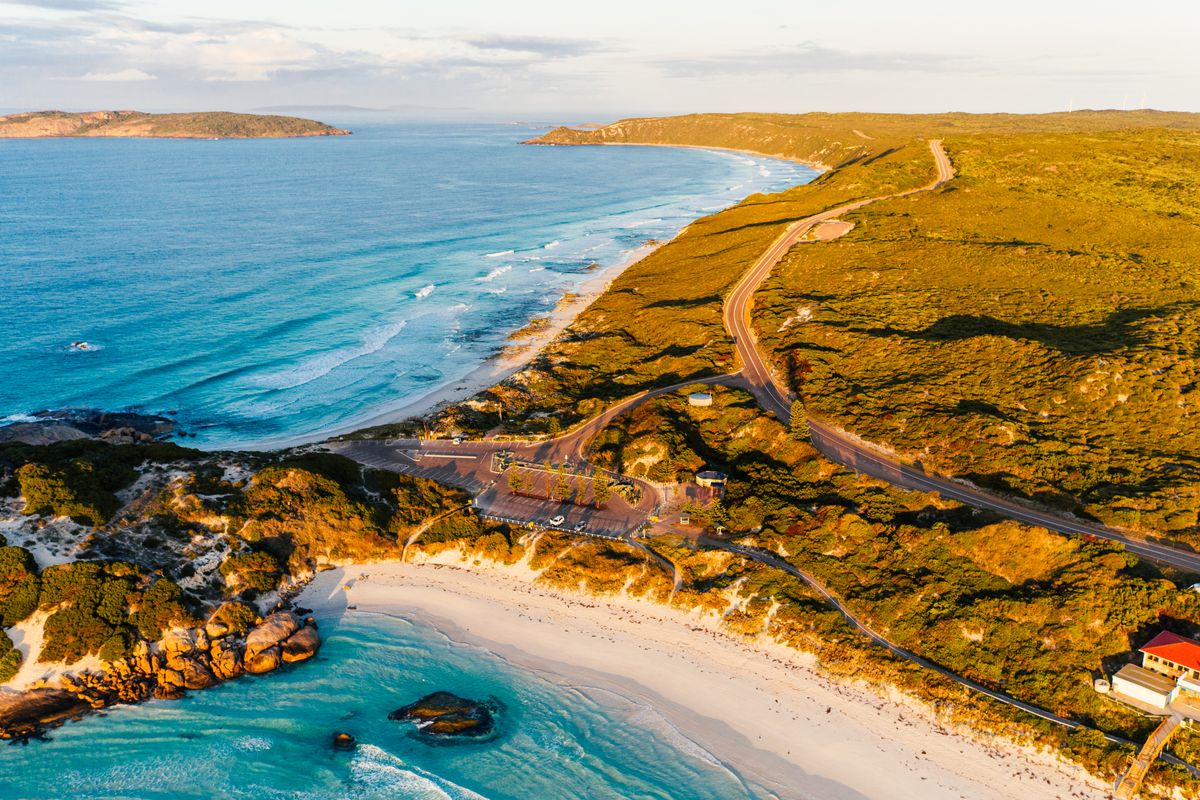
Freycinet National Park sits on Tasmania's east coast, a few hours' drive from Hobart. The Hazards define it: a wall of pink granite rising straight out of the Tasman Sea. Below them, Coles Bay is the gateway town, and beyond the peninsula lie Wineglass Bay, a string of smaller beaches and water that is clear in a way you do not expect from the sea. People come for the walking. The paddling is quieter and more conditional, and worth understanding before you put a packraft on the water.
The place
The Freycinet Peninsula is a narrow finger of granite running south from Coles Bay. On the western side, Great Oyster Bay is wide and open, exposed to whatever the westerlies carry across it. On the eastern side, smaller inlets and beaches face the Tasman. Between those two faces, the topography funnels wind in ways that change quickly.
The water colour comes from the geology. Granite country drains clean. In the sheltered inlets on a calm day you can see the bottom at depth. Clarity does not mean warmth. The Tasman is cold, and cold water matters when you are in a small inflatable.
What paddling here means in practice
Sea kayak tours operate out of Coles Bay. They run in the right conditions, with guides who read this coastline regularly and carry the skills to manage a shift in conditions. Those tours exist for a reason. Freycinet is marine water. The Hazards channel wind. Swell wraps around the peninsula from the open Tasman. On a rough day this is no place for a small inflatable.
A self-bailing touring packraft is built for lakes, inlets and easy rivers. The most sheltered corners of Freycinet, on the right day, fall inside what that hull can handle. The operative phrase is most sheltered corners on the right day. Not the whole park. Not every day. Treat this coastline casually and you will have a bad time.
Reading a settled day
Wind controls everything here. Light winds at 9am do not guarantee light winds at 2pm. The sea breeze builds through the morning on warm days, and afternoon is often the worst time to be on the water. Morning windows are real, but you need to know what the wind will do later, not just what it is doing when you launch.
A day worth launching on has a forecast you trust, not one you hope will hold. Check the Bureau of Meteorology marine forecast for the east coast. Look at whether swell from the open Tasman is wrapping into your chosen bay. If the forecast is marginal, the answer is no. On a marginal day the Freycinet Peninsula Circuit delivers the same granite views from solid ground.
Offshore winds blow you away from shore. Onshore winds build chop and push you onto rocks. Both are dangerous in a small inflatable. Cold water makes a swim serious faster than you expect. Stay within an easy swim of shore. If conditions change, get off the water immediately. In most cases the track back is a better option than pressing on.
The walk-plus-paddle pattern
Freycinet is a walking park first. The track network reaches beaches and headlands that justify multi-day trips on their own. The Freycinet Peninsula Circuit takes in Wineglass Bay, Hazards Beach and the southern beaches. A packraft in the pack can add a calm-bay paddle to one of those walking days. That framing matters. The paddle adds to the walk. It is not the day's purpose.
Hazards Beach, on the western side of the peninsula, is one bay where conditions are sometimes manageable for a small inflatable. Great Oyster Bay behind it is open water. Know the difference before you walk in. Check Parks Tasmania for any restrictions on launching at specific locations before you plan a route.
Wildlife and water quality
Dolphins move through the bays regularly. Rays cross the sandy shallows. Seabirds work the shoreline. Water quality at Freycinet is high, held up by a catchment with no intensive agriculture and limited development. That granite-country clarity makes wildlife in the water easier to see than on most coasts.
Take the wildlife as you find it. Keep your distance. Never chase an animal with a packraft. The marine environment here is part of the national park, and the care that applies on the tracks applies on the water.
Rules and care
Freycinet is a national park. A parks pass is required for entry. Check Parks Tasmania for current fee structures and purchase options before you arrive. Camping requires a permit, and sites must be booked through the Parks Tasmania system. Campsites on the peninsula are popular and often fully booked, particularly in summer.
Launching rules and restrictions on water access in specific areas can change. Do not rely on third-party information for this. Check Parks Tasmania directly for current conditions, closure notices and any specific guidance on water access before your trip. Some beaches may have seasonal restrictions to protect wildlife.
Carry out everything you carry in. The park depends on it.
Who this coast suits
Freycinet suits paddlers with sea sense and the discipline to sit out a marginal day without counting it as a failure. That is not most people who search for packrafting in Tasmania. Most days at Freycinet are not small-inflatable days. Wind and swell off the Tasman make this coastline seriously demanding. The park is worth the visit regardless. The walking is excellent. The scenery delivers.
If you read marine forecasts comfortably, stay conservative about conditions and turn around without a second thought, then the calmest inlets on the calmest mornings are within reach of a Seeka. The walk is always the fallback, and at Freycinet it is rarely a consolation prize.