
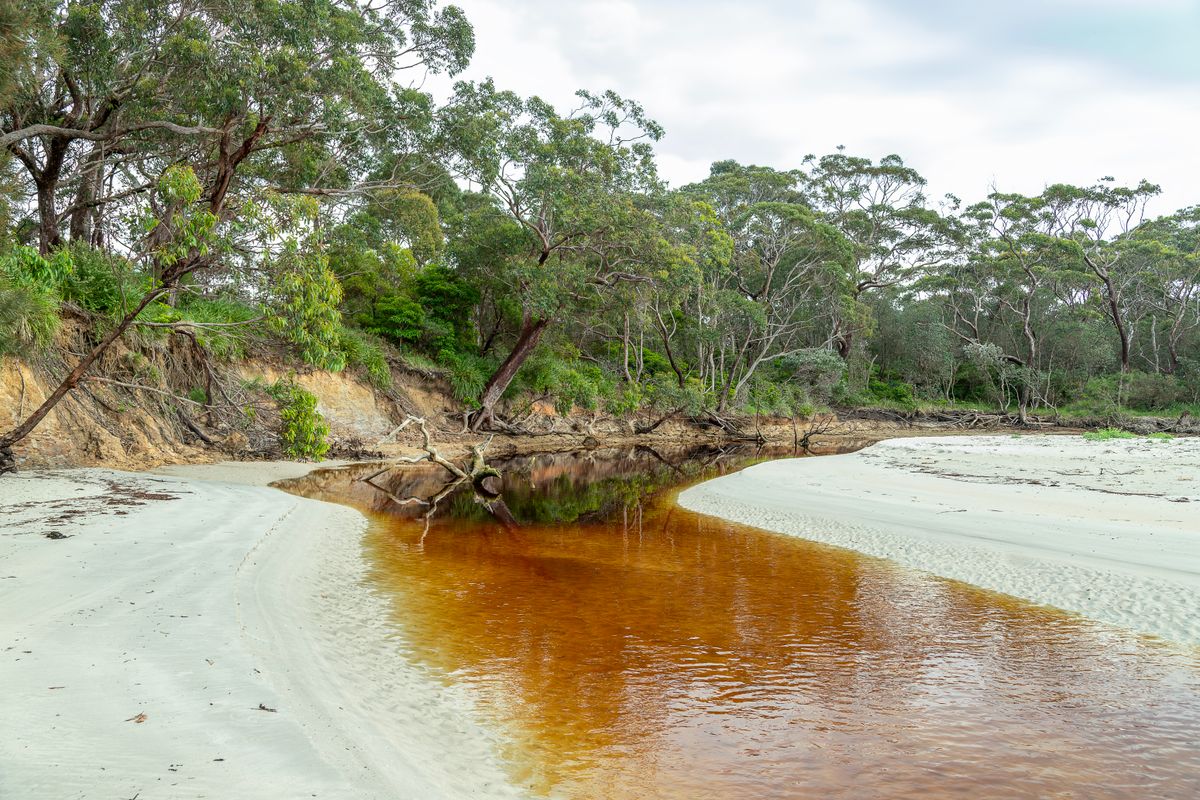
The Gordon River moves slowly through western Tasmania in wide, dark sweeps, its water stained the colour of black tea by the buttongrass and rainforest catchment around it. It is broad, flat and cold, and the country around it is part of the Tasmanian Wilderness World Heritage Area, one of the largest temperate wilderness areas left in the Southern Hemisphere. Getting onto this water takes serious planning. Staying on it takes weather patience and a clear head about your own limits.
What the river is
The lower Gordon is a flat-water river. No significant gradient, no whitewater, nothing technical to paddle. The current is gentle. The scale is large. The banks are dense temperate rainforest, Huon pine, King Billy pine and leatherwood pressing close to the water in places and opening into broader reaches in others. The further upstream you travel from Macquarie Harbour, the fewer traces of the outside world you see.
The tannin colour is not pollution. It is what water does after filtering through the organic matter of a rainforest catchment. It makes the river look almost black under cloud and a rich red-brown in direct sun. It also makes depth hard to judge. The water is cold in every season.
How most people see it
Most visitors see the Gordon from a cruise out of Strahan. Strahan sits on Macquarie Harbour, and cruise operators run day trips that cross the harbour and travel a short way up the lower river. It is a well-established part of the Strahan visitor experience and the easiest way to see the river without a remote paddling expedition.
Paddlers are a small minority. The Gordon has no paddling circuit in the usual sense. No shuttle road at the end of a day trip. The river does not deliver you to a car park. Paddle here and you are doing something closer to a wilderness expedition than a weekend float.
The access reality
This is not a drive-up river. No public road brings you to the banks of the lower Gordon with gear in the boot. Access means crossing Macquarie Harbour by water, so either you arrange transport out of Strahan or you arrive as part of a larger, vessel-supported expedition. Some paddlers come in from deeper in the wilderness on long multi-day routes, but those demand substantial experience, full expedition logistics and a thorough understanding of the terrain.
Check Parks Tasmania for current access rules, camping regulations and any permit requirements before you plan anything. Talk to people in Strahan who know the harbour and the river. Local knowledge of conditions on Macquarie Harbour is not optional. The harbour is the threshold, and it is exposed.
What the paddling is like
On a settled day the lower Gordon is dark water at a scale that takes time to absorb. You are small against the width of the river and the height of the forest. The current itself holds no technical challenge. The challenge is everything around it: distance from help, cold water, weather that turns quickly, and no phone coverage at all.
Wind is the main paddling hazard. Macquarie Harbour is wide and exposed. Wind builds across it faster than a forecast suggests, and a packraft or small inflatable in a strong headwind on open water is a serious situation. Timing your harbour crossings around weather windows is not a precaution. It is the central planning task.
Once you are on the river proper, wind eases as a factor, but weather still drives everything. Rain is frequent. Cold is constant. Reading conditions, waiting them out and changing plans without ego is what separates safe trips here from dangerous ones.
Weather and season
The west coast of Tasmania receives some of the highest rainfall in Australia. There is no dry season in any meaningful sense. Settled windows do come, particularly in the warmer months between November and March, but they are short and never guaranteed. The Southern Ocean systems that cross this part of the state are powerful and move fast.
Water temperature on the Gordon is cold year-round. In winter it drops further, but even in summer, going in without exposure protection is a risk. A wetsuit at minimum, and ideally a drysuit for longer trips, is the right call. Cold water shock hits immediately, and rescue is a long way off on this river.
Camping and park rules
The Gordon River lies within the Tasmanian Wilderness World Heritage Area. Specific rules apply to camping, fires and land use. Do not assume wilderness means freely accessible. Check Parks Tasmania for current requirements before your trip and carry whatever documentation or permits they specify.
Who this river suits
The Gordon suits experienced, self-sufficient paddlers who are comfortable with multi-day remote travel, have solid flat-water skills, carry proper exposure protection and hold realistic expectations about weather delays. It does not suit beginners, or anyone who needs a reliable daily schedule. Patience is a core skill here, not a bonus.
Bring the experience and the willingness to sit out weather, and the Gordon rewards it. The flat, dark water and the scale of the World Heritage country around it stay with you. A Seeka is built for exactly this kind of water: flat, slow, cold and far from the road. The remoteness is the filter that keeps it what it is.