
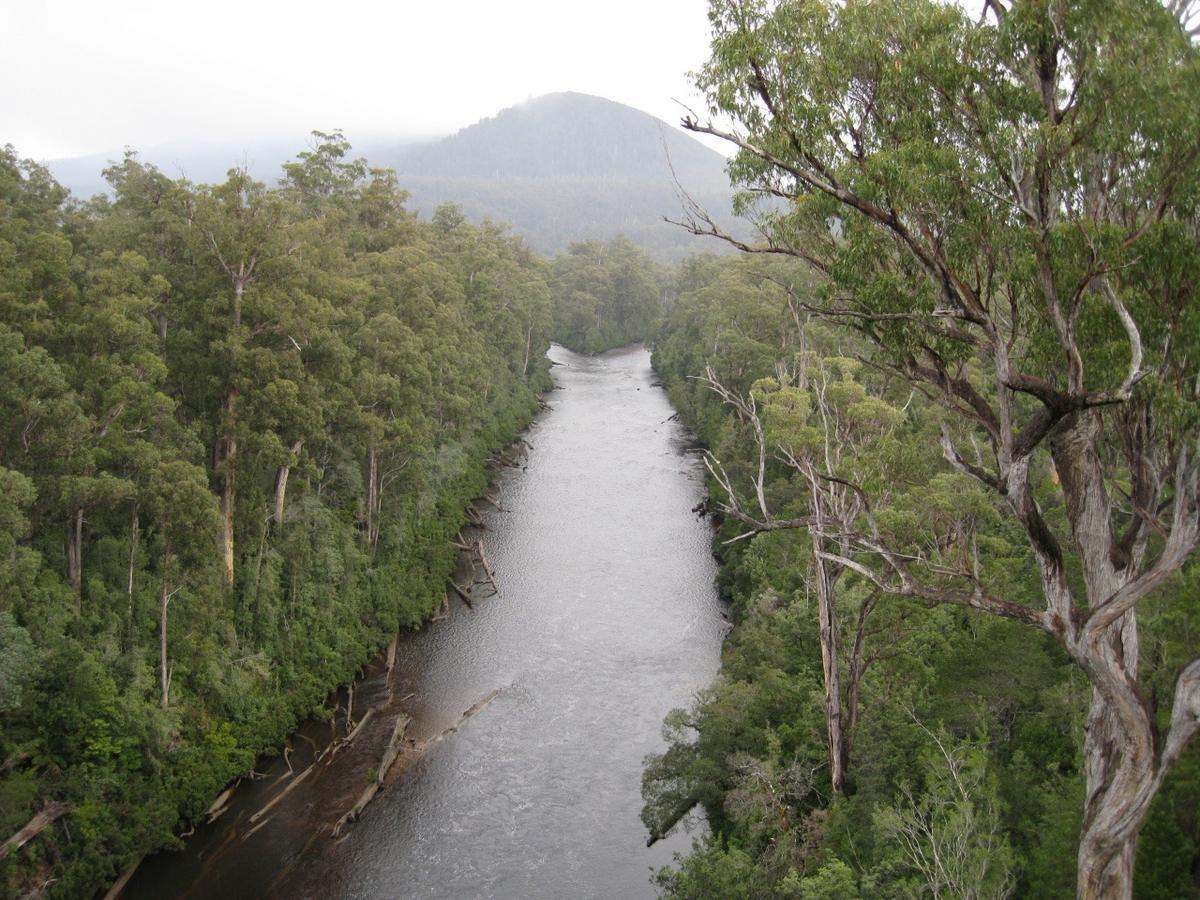
The Huon River drains a large part of southern Tasmania. It runs from the mountains of the south west out through forestry and farmland to a wide tidal estuary below Huonville.
It is a long river with several characters along its length, and the paddling changes completely depending on which part you choose.
Tannin water
The Huon runs dark. Water draining through button grass and peat picks up tannin, which stains it the colour of strong tea without making it dirty.
It also makes depth hard to read. You cannot see the bottom the way you can on a clear alpine stream, so rocks and snags arrive with less warning. Slow down where you are unsure.
The three parts of the river
The upper river drains remote and difficult country in the south west. Access is limited, the weather is serious, and it is not a casual day trip.
The middle reaches, through forestry country and towards Judbury, offer moving water with a mix of easy flowing sections and steeper bits depending on level. This is where most river paddling on the Huon happens.
Below Huonville the river becomes a tidal estuary, wide and slow, running out past orchards and small settlements towards the D'Entrecasteaux Channel. Down here it is flat-water paddling with tide and wind to manage rather than current.
The estuary is the accessible end
For a packraft carried in, the lower estuary is the straightforward option. There are places to launch around Huonville and Franklin, and the water is generally calm in the mornings.
Tide matters more than current down here. Work out which way it is running and ride it on the return leg. An outgoing tide with a headwind against it builds short, steep chop that is unpleasant in a small craft.
It is also a working waterway with moorings and boat traffic. Stay clear of the channels and be visible.
Levels and rain
The catchment is large and wet. The middle river responds to rainfall over days rather than hours, but sustained rain in the south west lifts it considerably.
Check available gauge data and recent rainfall before committing to a river section. In low summer conditions parts of the middle river can be too bony to paddle.
Weather in southern Tasmania
Conditions change fast and the water is cold for most of the year. A mild morning is no promise about the afternoon.
Dress for immersion, carry a windproof layer, and keep a dry set of clothes sealed in a dry bag. Wind funnelling up the estuary in the afternoon is normal, not exceptional.
Access and permission
The Huon passes through a mix of national park, state forest, production forestry and private farmland. Rules differ between them, and some forestry areas have operational closures.
Check with Parks and Wildlife Service Tasmania and Sustainable Timber Tasmania for current access, and ask before crossing private land. River frontage is frequently in private hands.
What to watch for
Fallen timber in the moving sections, particularly after high water. Cold water year round. Wind against tide in the estuary. Limited mobile coverage away from the towns.
Leave your trip intentions with someone before you go, and a time you will call when you are off the water.
Where a Seeka fits
The estuary and the easier flowing reaches are packraft country. Walk or ride in, paddle, roll it up, go home. The steeper upper river and open coastal water are not what a Seeka is built for.