
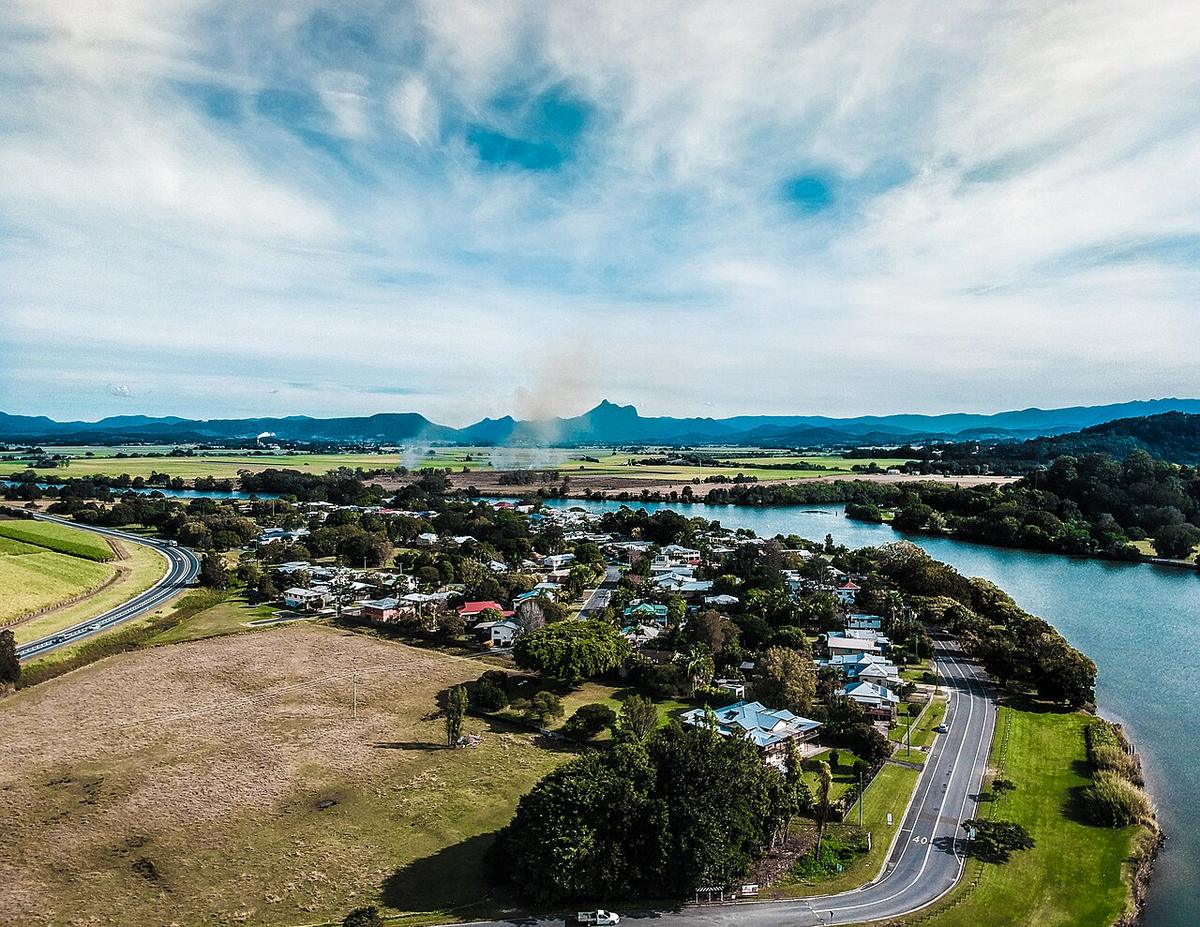
The Tweed River drains the great caldera around Wollumbin (Mount Warning) in far north-east New South Wales and runs past Murwillumbah and Tumbulgum to the sea at Tweed Heads. Below Murwillumbah it is a broad tidal river winding through cane fields, with the mountain standing over the whole valley.
That lower river is the part most paddlers come for. It is wide, slow and easy to reach, and the scenery does a lot of the work.
A river inside a volcano
The Tweed Valley is the eroded remains of an ancient shield volcano. Wollumbin is its central plug, and the rim of ranges around it forms the edge of the catchment. On a clear morning you can see the peak from almost anywhere on the water.
Wollumbin is a place of cultural significance to the Bundjalung people. Respect that when you are in the valley, and follow the guidance of the land managers about the mountain itself.
Tide runs the lower river
The tide reaches well inland on the Tweed, and on the lower river it matters more than any current. Check the tide times before you go, paddle out with the ebb or the flood, and plan to come back on the turn.
A strong run-out tide meeting a sea breeze builds short chop on the wider reaches, particularly in the afternoon. Mornings are usually calmer.
Hazards to know
The lower Tweed is a busy waterway. Expect moored and moving boats, water-skiers on some reaches, and wash from larger craft. Keep to the edges, cross channels at right angles, and wear something bright.
Bull sharks live in the Tweed, as they do in most east coast estuaries. Avoid swimming in murky water, at dusk, and after heavy rain, and keep fish frames and bait out of the water around you.
The river mouth at Tweed Heads opens onto the ocean through a trained bar with strong tidal flows and boat traffic. It is not packraft water. Stay well upstream of it.
Reaches and access
Tumbulgum, where the Rous River joins the Tweed, is a pleasant base for an out-and-back paddle on the main river or up the quieter Rous. Around Murwillumbah the river is narrower, with parks and reserves close to the water.
Tweed Shire Council manages the public reserves and ramps along the river. Check with the council for current access points, and with Transport for NSW for boating rules on the waterway.
Rain and water quality
The Tweed catchment gets heavy rain, and a big fall lifts the river fast. After a flood the water runs brown, carries debris, and can take days to settle.
Check the Bureau of Meteorology warnings before a trip, and give the river time to clear after heavy rain. Autumn and winter usually bring the most settled paddling weather.
Practical notes
Summer days are hot and humid, with afternoon storms building over the ranges. Start early, carry plenty of water, and head for the bank when you hear thunder.
Wear a buoyancy vest, tell someone your plan, and set a time to call when you are off the water.
Where a Seeka fits
The tidal reaches around Tumbulgum and Murwillumbah, on a calm morning with the tide in your favour, suit a Seeka well. The bar at Tweed Heads and the open coast beyond it do not.