
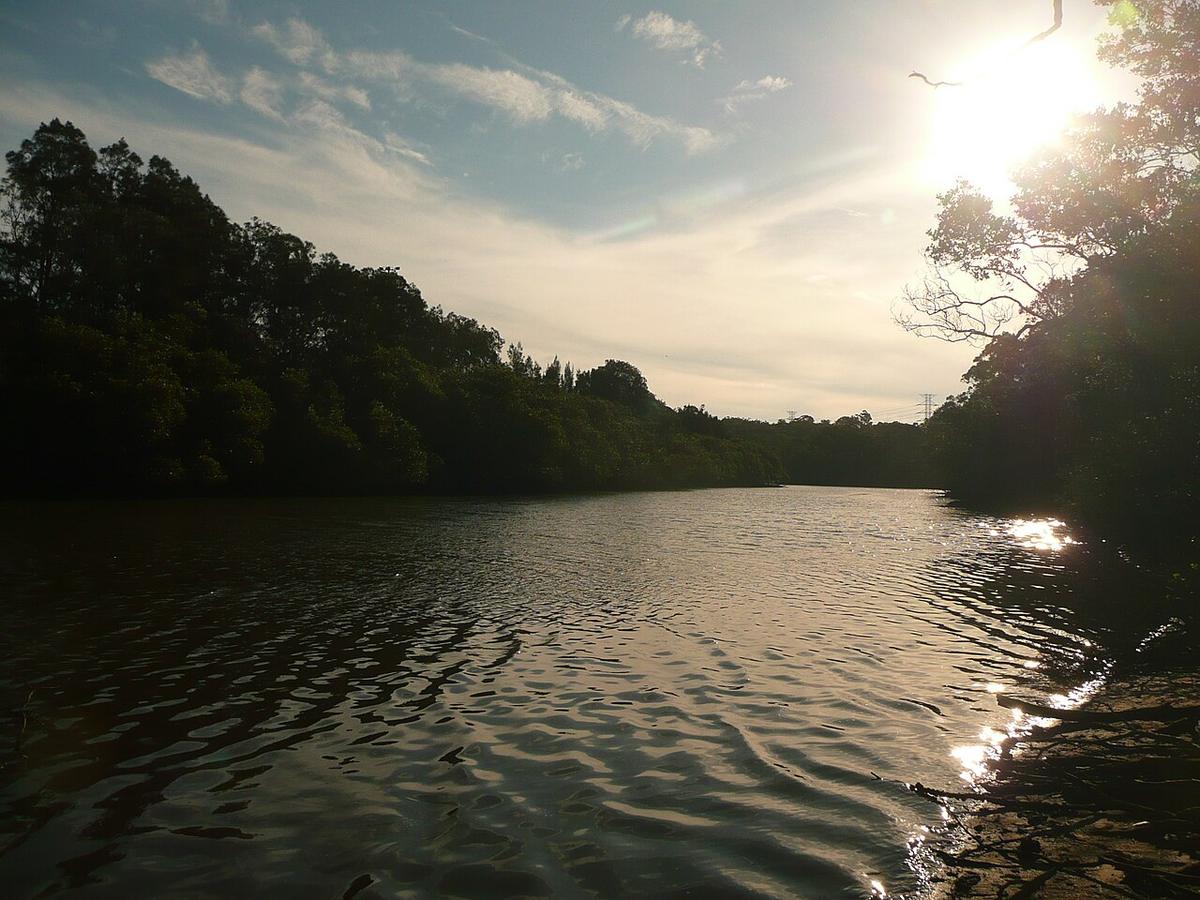
The Lane Cove River rises in Sydney's northern suburbs and runs south-east through Lane Cove National Park to meet the Parramatta River and Sydney Harbour near Greenwich. A weir in the national park splits it in two: a narrow freshwater river above, and a tidal, mangrove-lined estuary below.
It is one of the few places in Sydney where you can paddle for a couple of hours with bush on both banks and barely see a house.
Above and below the weir
Above the weir the river is a slow, narrow freshwater pool winding through the national park, with eucalypt forest and picnic areas along the banks. It is sheltered, calm and close to the park's road access.
Below the weir the river is tidal. Mangroves line the banks, sandstone shows through the bush on the slopes, and the river widens gradually as it heads down past Fairyland and Boronia Park towards the harbour.
The weir itself is a hazard. Do not paddle over it or play in the water at its base. Land well upstream, carry around on the bank, and relaunch clear of the outflow.
Working the tide
The upper tidal river is narrow and shallow in places. At low water, mudflats and oyster-covered rocks come out along the edges and some side creeks drain completely.
Plan around a tide table. Paddle up towards the weir on the flood and ride the ebb back down, or aim for the hours either side of high water when there is room everywhere. Oyster shell on rocks will cut feet and fabric alike: launch and land on sand or at ramps.
Sections and access
The national park gives the most access, with picnic areas and launch spots on both the freshwater and tidal sides. Further down, public reserves on the suburban banks let you start or finish closer to the harbour.
Lane Cove National Park is managed by NSW National Parks and Wildlife Service. Check with them for vehicle entry fees, current launch points and any closures before you go.
Levels and timing
The river drains a mostly urban catchment, which means it rises quickly after heavy rain and carries stormwater with it. Give it a day or two after a storm before paddling, and check NPWS park alerts before you go.
Outside wet spells the river is paddleable year round. Early mornings bring birdlife, still water and an empty river. Weekends in the park get busy on land but stay relaxed on the water.
Practical notes
Lower down, towards the harbour, the river becomes part of a busy waterway with ferries, moored craft and faster traffic. Keep to the edges and turn back before the open harbour.
Fallen trees reach into the freshwater section above the weir. Pass them with room to spare.
Wear a PFD, leave your trip intentions with someone, and set a time to call when you are off the water.
Where a Seeka fits
Both halves of the Lane Cove suit a packraft: the sheltered pool above the weir for a first paddle, and the tidal river below for a longer run on the tide. Sydney Harbour itself is not where a Seeka belongs.