
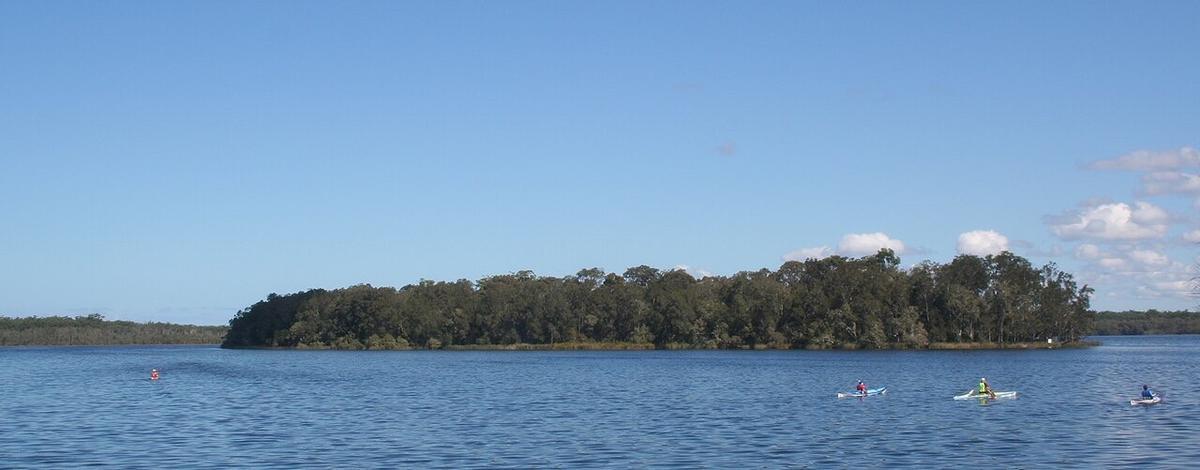
Myall Lakes National Park sits on the NSW mid-north coast, north of Newcastle and within easy reach of Sydney. Behind a long barrier of coastal dunes lies one of the state's largest lake systems: Myall Lake, Boolambayte Lake and The Broadwater, linked by channels and draining to the sea through the Myall River at Tea Gardens and Hawks Nest. The whole system is big, paperbark-edged and mostly flat. Paddlers and houseboaters have been coming here for decades, and the multi-day routes it offers on inland water are among the more accessible on the east coast.
How the system fits together
Three major lakes connect by channels behind the dunes. The shorelines shift between paperbark swamp, palm forest and sandy beaches with nothing built behind them. The water runs from clear green in the shallows to deep blue-grey out in the middle of the main lake. The dunes and vegetation on the ocean side keep the lakes in a protected basin. Protected from ocean swell is not the same as protected from wind.
The Broadwater in the south is the widest section. Myall Lake in the north is the largest. The channels between them are narrower, shallower and less exposed. Get to know the map before you launch. The scale of the system is easy to underestimate from the shore.
The multi-day lake-hop
The classic way to paddle Myall Lakes is to move between the lakes over two or more days, camping at lakeside sites along the way. NPWS manages the campgrounds within the park. Booking is required, so check the NPWS website for current sites, fees and availability before you plan a route.
The channels are the calm connective tissue of the trip. When the main lakes are too rough to cross comfortably, the channels give you shelter and progress. Build flexibility into the itinerary at those decision points and use channel time when the open lake is not worth it.
Carries between water and camp tend to be short. Much of the lakeside camping sits close to the water. That low-portage character suits heavier loads and less experienced paddlers who still want a multi-day trip.
Wind planning
The fetch across Myall Lake is long. Wind that looks mild from camp pushes up a short chop that is uncomfortable and draining for a small craft in the middle of the lake. By lunch on a warm day the sea breeze often fills in from the north-east. A paddler caught in open water at that point has limited options.
So start early. Cross the open water in the morning window before the breeze builds. Hug the shoreline rather than cutting across the centre of the lake. If you are not across before conditions turn, find shelter and wait. The channels and the lee shorelines almost always give you somewhere to sit it out.
Check the Bureau of Meteorology forecast for the mid-north coast before each day. A marginal forecast on a day with a big open crossing is a day to adjust the plan, not push through it.
Sharing the water
Houseboats are part of Myall Lakes. So are tinnies, ski boats and other motorised craft. The system is popular, particularly over school holidays and long weekends. That is simply the character of the place.
As a paddler, visibility and predictability are your responsibilities. Stay out of the main channel where powered traffic concentrates. Wear bright colours. Make your course clear. Do not assume a houseboat skipper has seen you. Move defensively and give powered craft room to manoeuvre.
In peak periods, the less-travelled reaches of the system see far less traffic. Weekday paddling is noticeably calmer than weekend paddling. Time your trip accordingly if traffic is a concern.
The sheltered corners
The channels away from the main lake, the paperbark edges and the upper reaches of Boolambayte Lake draw far less powercraft than the main body of Myall Lake. These sections reward a slow pace. Birdlife concentrates here: herons, cormorants, kingfishers, black swans.
On calm water you can paddle close in along the paperbark forest that lines some of the channel edges. The light through that canopy belongs to this kind of wetland and nowhere else. These sections move at a different pace to the open lake, and the contrast between the two is part of what makes the multi-day route work.
Sun exposure on the open lake is real. The dunes block wind more than they block UV. Reef-rated sunscreen, a hat with a brim and a long-sleeved layer matter on a full lake day.
Who the lakes suit
Myall Lakes suits paddlers on their first multi-day trip on inland water. It suits families who want camping with a paddle rather than a pure wilderness experience. It suits anyone building lake skills before committing to more remote systems. The infrastructure is there, the campsites are reachable, and the terrain does not demand advanced water-reading.
It also suits experienced paddlers who want a low-logistics trip close to Sydney. The drive is short enough for a mid-week escape without burning most of the time in transit.
Sheltered coastal lakes with camps close to the water are the sort of trip a Seeka is built around.