
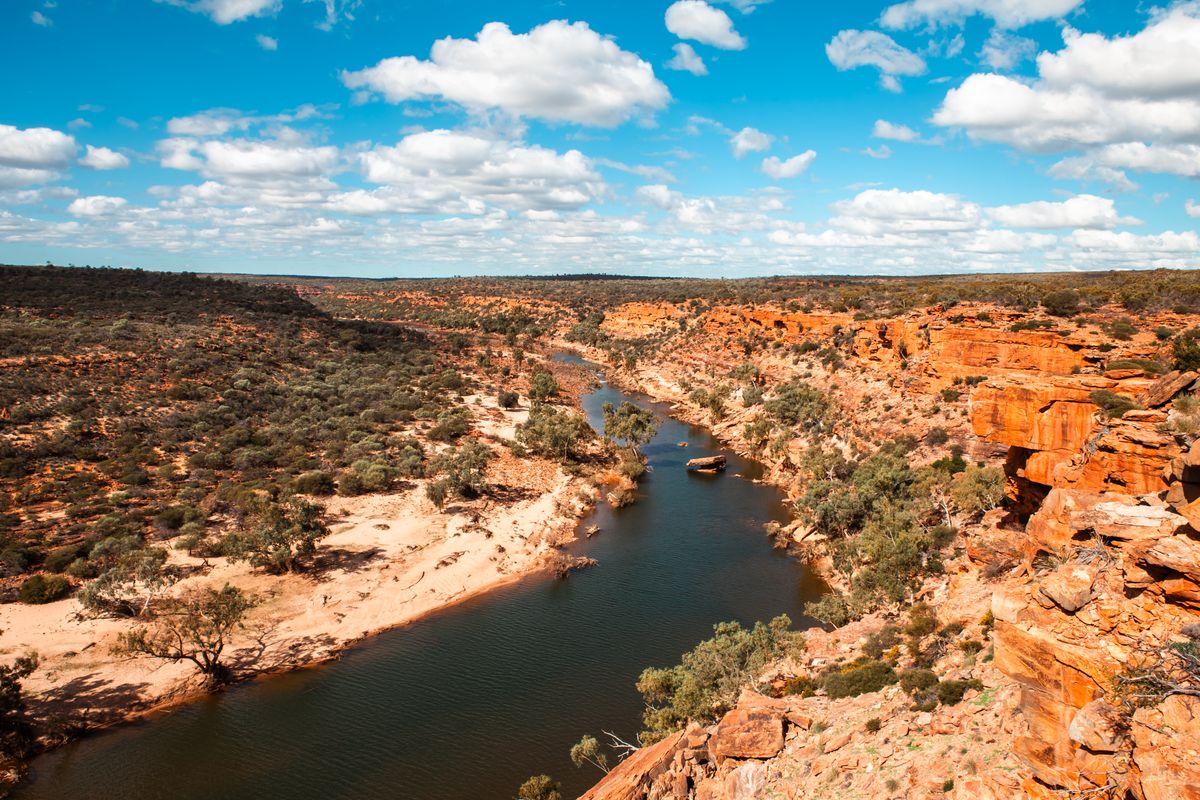
The Colo River runs through Wollemi National Park, north-west of Sydney. A short drive from the city and you are standing in a deep sandstone gorge with cliff lines rising on both sides and no road in sight. That contrast is why people go. It is not a polished experience. The walk in is steep, the summer heat is real, and at low levels the river is as much drag work as paddling. For anyone who wants real wilderness close to home, the Colo is one of the more compelling options on the east coast of New South Wales.
The country
Wollemi is sandstone country. The gorge walls are orange and grey, streaked with seepage and lichen. River oaks line the banks and drop their fine needles onto white sandbars. At normal levels the river slides between long flat pools. The water is typically clear. You do not feel the scale of the cliffs until you are down at river level looking up. Birdlife is constant. The gorge closes around you in a way plateau country rarely does, and the silence between bird calls is part of the place.
Getting in
Reaching the gorge proper means committing to a walk. Ridge tracks drop off the plateau on the Putty Road side, and the descent is steep on loose ground. You are carrying a pack and a hull, which changes the arithmetic. A packraft that compresses to a fraction of its inflated size goes in where a rigid craft simply does not. The lower river, near Colo village where the Colo meets the Hawkesbury system, offers a different and gentler entry point suited to shorter trips. Track access, closures and any permit requirements change, so check with NPWS before you go.
What the water is like
At normal levels the Colo is pool-and-run water. The pools are the reward: flat, reflective, long enough to paddle properly. Between them the river shallows to sandy runs and gravel beds where you are out of the packraft and dragging. Plan for it. A party expecting to float the whole way will be frustrated. A party that treats it as walking with paddling, with the pools as the highlight, finds the rhythm of the place. Flood response in a big sandstone catchment is fast and severe. High water on the Colo is not a paddling opportunity for recreational craft. It is a reason to stay home.
Camping
Sandbars are the natural camps on the Colo. A flat bar in the bend of the river, cliffs above, river oaks behind. That is the standard experience and it is a good one. The best bars have enough sand to spread out gear and dry kit at the end of the day. No-trace discipline applies: pack out everything, keep fires within any conditions NPWS sets, and camp well clear of vegetation. Camping rules in Wollemi can vary by zone and season, so confirm current requirements with NPWS before you leave. Do not assume the rules are the same as last time.
Hazards
The gorge sits inside a large national park with no phone coverage. Self-rescue is the assumption. Tell someone your plan, your entry and exit points, and your expected return date. The walk-ins cross steep, loose terrain, and a twisted ankle on the descent with a full pack and a hull is a serious situation. Summer in the gorge is hot, with little shade on the water in the middle of the day. Carry more water than you think you need, and treat river water before you drink it. Flash flooding can arrive without local rain. Check upstream weather before you go and know where the high ground is from each camp.
Who the Colo suits
The Colo suits fit parties who are comfortable with multi-day wilderness travel and honest about the effort involved. Navigation is straightforward. The physical commitment is not trivial. It is not a trip for anyone expecting a float. The appeal is the combination: remote gorge country, reachable from a major city, with enough water to make a hull worth carrying. A light self-bailing packraft that walks in on your back is the right tool for a pool-and-drag river like this one.