
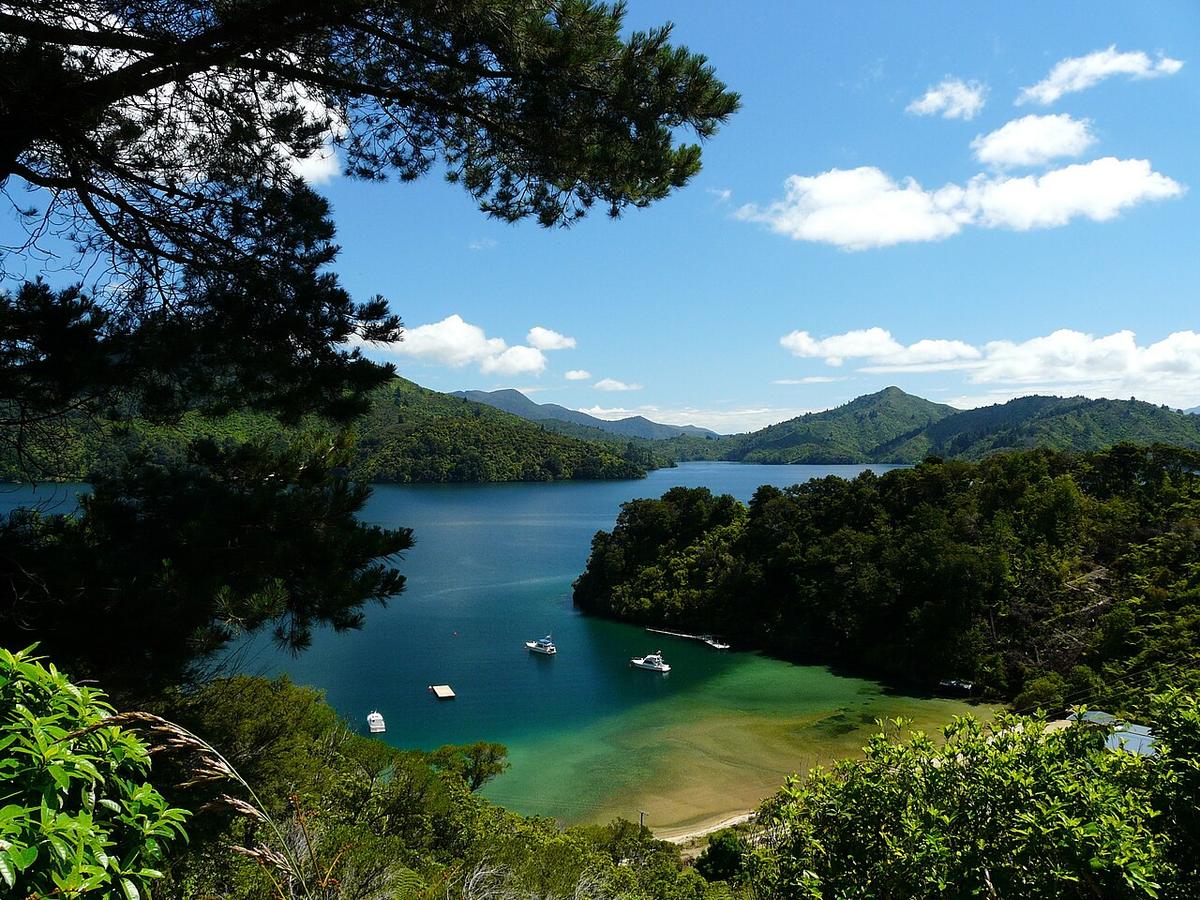
The Marlborough Sounds are a maze of drowned river valleys at the top of the South Island, where forested ridges run down into long arms of sea. Queen Charlotte Sound, Tōtaranui, reaches from Picton out towards Cook Strait, and its sheltered bays and coves are where packrafting here makes sense.
This is salt water, but it is not open coast. The trick is choosing the right bays on the right day.
Drowned valleys and sheltered bays
Queen Charlotte Sound is long and narrow, with dozens of side bays cutting into the hills on both shores. Many are small, steep-sided and protected from the main reach of the sound.
Those bays are packraft water. Short crossings, beaches to land on, bush down to the tide line. The open middle of the sound, and the outer entrance towards Cook Strait, are a different proposition entirely.
Ferries and wake
The Cook Strait ferries run between Picton and Wellington through the sound, along with water taxis, mail runs, charter vessels and private craft.
Big ships throw a wake that arrives well after they pass, and it can surge up onto beaches and rocks. Keep out of the main shipping route, cross the busy reaches only where you must and as directly as you can, and pull well up the beach when you stop. Tory Channel carries strong tidal currents as well as ferry traffic and is no place for a packraft.
Wind is the deciding factor
Wind funnels along the arms of the sound, and it can go from calm to whitecaps within an hour, especially in the afternoon. A strong northwesterly is common.
Plan around the forecast. Paddle early, stay close to shore, keep crossings short, and have a landing you can reach within minutes. If the sound is white out in the middle, stay in the bay.
Access by track and water taxi
The Queen Charlotte Track follows the ridges and bays between Ship Cove and Anakiwa, and many people walk sections of it. Water taxis from Picton drop off and collect walkers and gear at points along the sound.
That makes a walk-and-paddle trip possible: walk a section, paddle across a sheltered bay, and pick up the track again. Parts of the track cross private land, and rules on camping and access vary. Check current details with DOC and the Marlborough District Council before you go.
Tides and sea conditions
Tides run through the sound and the current strengthens in narrow passages and around points. Work out the tide times, and plan so you are not fighting both wind and tide on the way back.
The water is cold enough to matter for most of the year. Dress for immersion and keep a dry layer sealed away.
Practical notes
Parts of the sound are marine reserve, where fishing and collecting rules apply. Mobile coverage is patchy away from Picton. Carry a way to call for help that does not rely on it.
Wear a buoyancy vest, tell someone your plan, and set a time to call when you are off the water.
Where a Seeka fits
A calm morning in a sheltered bay, reached on foot or by water taxi, is a good day in a Seeka. The open reaches of the sound in wind, Tory Channel, and anything towards Cook Strait are not what a Seeka is built for.