
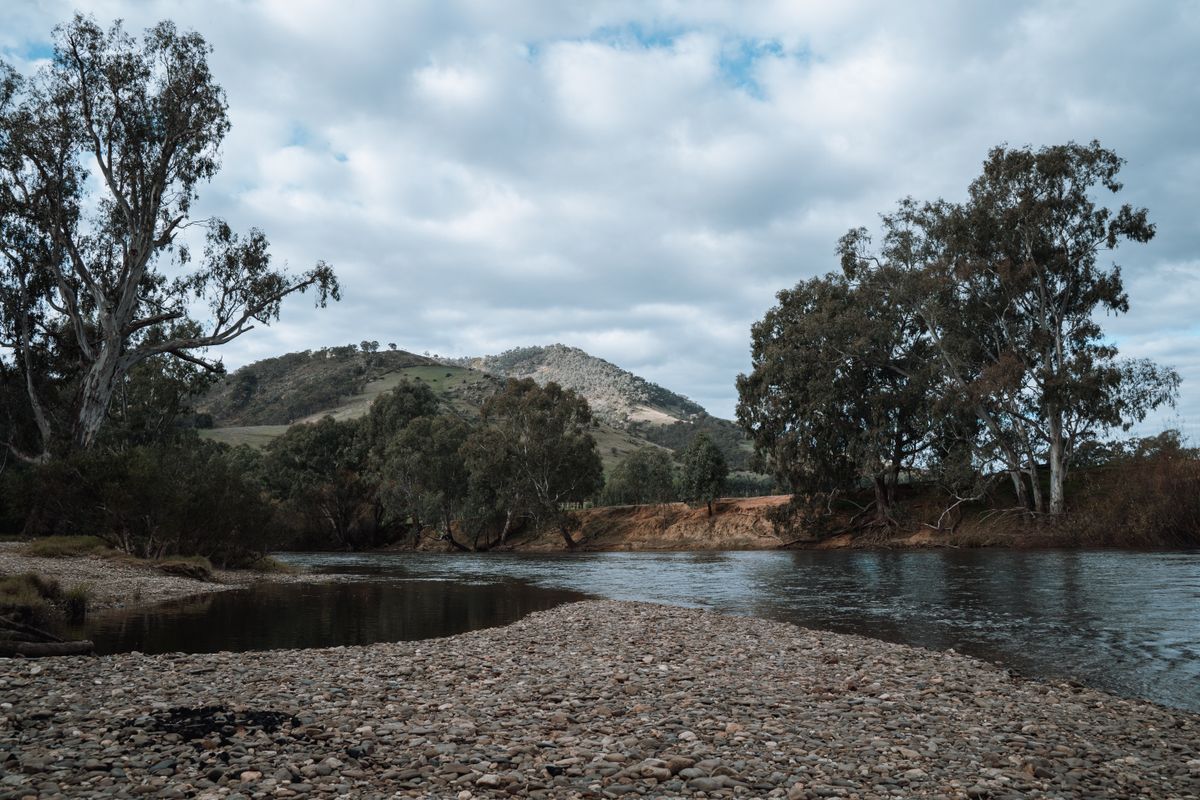
The Jamieson River comes out of the Victorian high country, drops off the ranges and winds down to the Goulburn near the small township of Jamieson. Snowmelt and rain feed it, so the river you paddle depends entirely on when you go and what the catchment has had. At the right level it is proper moving water through a thinly settled valley. At low summer levels it can be little more than a wade.
Where it sits
Jamieson township is the rough centre of this part of the high country, roughly halfway between Mansfield and Licola on the eastern side of the ranges. The river collects drainage from steep forested hills and the broader Great Dividing Range country above. It is not remote the way many Victorian alpine drainages are. Road runs along much of the lower sections. But the valley is quiet, sparsely farmed in places, and the hills close in fast as you head upstream.
The upper reaches sit in rougher terrain. Walking in takes real effort, and the ground above the valley floor is steep enough that any plan for the upper river has to account for the walk back out, not just the paddle down.
Levels and season
Water level decides everything. It is the difference between a good day on the Jamieson and an afternoon dragging a packraft over gravel. Rain and snowmelt feed the river, so late winter and spring tend to bring the best flows. Summer can drop levels to the point where sections become unrunnable without significant portaging.
Do not plan around a level you saw months ago or read in someone else's report. Check current gauge readings and recent rainfall before you commit. After heavy rain the river rises quickly. A comfortable paddle on the way in can be a different river by afternoon. That turnaround speed is a real hazard, not a theoretical one.
Access and approach
Road access runs along parts of the valley, so you can put in and take out without a long carry. The usual approach is simple. Drive to a section, look at the water, paddle with the current. Where the road hugs the river, the shuttle takes care of itself.
The upper sections ask more of you. Walking into the higher reaches means a longer approach and a return that may not follow the river at all. Go up there for solitude and for the satisfaction of reading unfamiliar water carefully. Do not go up there on your first day on the Jamieson.
The road-accessible sections give you options. If one put-in looks wrong, move downstream and look again. Use that flexibility. Commit to a section only once you have seen the water in person, on the day.
What the paddling is like
The Jamieson is a small high-country river. Expect moving water, continuous bends, gravel bars and shallows you have to read ahead. In good spring flows some sections carry real pace, and the outer edges of the bends concentrate it. After significant rain the river pushes harder and features change character quickly.
You cannot paddle this river on autopilot. Bends hide what is coming, and in pushier water a missed line can carry you into bank vegetation or a strainer. Stop and scout anything you cannot read clearly from the water. Get out on a gravel bar and walk the section before you run it. That habit is how you paddle technical moving water without incident.
The river asks for basic river skills: reading current, ferrying, using eddies. If your paddling so far has been flat lakes or wide slow rivers, even a moderate high-country flow will feel fast. The river is not trying to be difficult. It is simply what a small mountain river is.
Hazards
Willows line stretches of the bank in parts of the valley. Where they overhang the water they form strainers, obstacles that let water through and not a paddler. In faster flows they are serious. Give overhanging vegetation a wide margin and set up your line well before you reach it.
Cold water is present year-round in the upper reaches. Winter and spring flows are very cold, cold enough that an unplanned swim pulls body heat fast. Wear a wetsuit or drysuit when conditions call for it. A PFD is not optional on moving water. It stays on.
The valley is thinly populated and mobile coverage is unreliable in places. Tell someone your plan: put-in, take-out and a reasonable return time. If something goes wrong, help from outside will not be quick. Self-rescue ability and conservative decisions count for more here than on a lake with a car park at the edge.
Who it suits
Paddlers who read moving water comfortably and make decisions on the move. People who have paddled rivers before, know what an eddy is and can reach one. For that paddler, the Jamieson at a reasonable level is a rewarding day. It is not a first river.
If you are new to moving water, start somewhere slower and wider where the margin for error is bigger. Come back to the Jamieson once ferry angles and current reading are second nature, not something you are working out while the river carries you downstream.
A Seeka fits the gentler road-accessible sections at friendly levels. The pushier water that follows heavy rain is a different category and not its territory.