
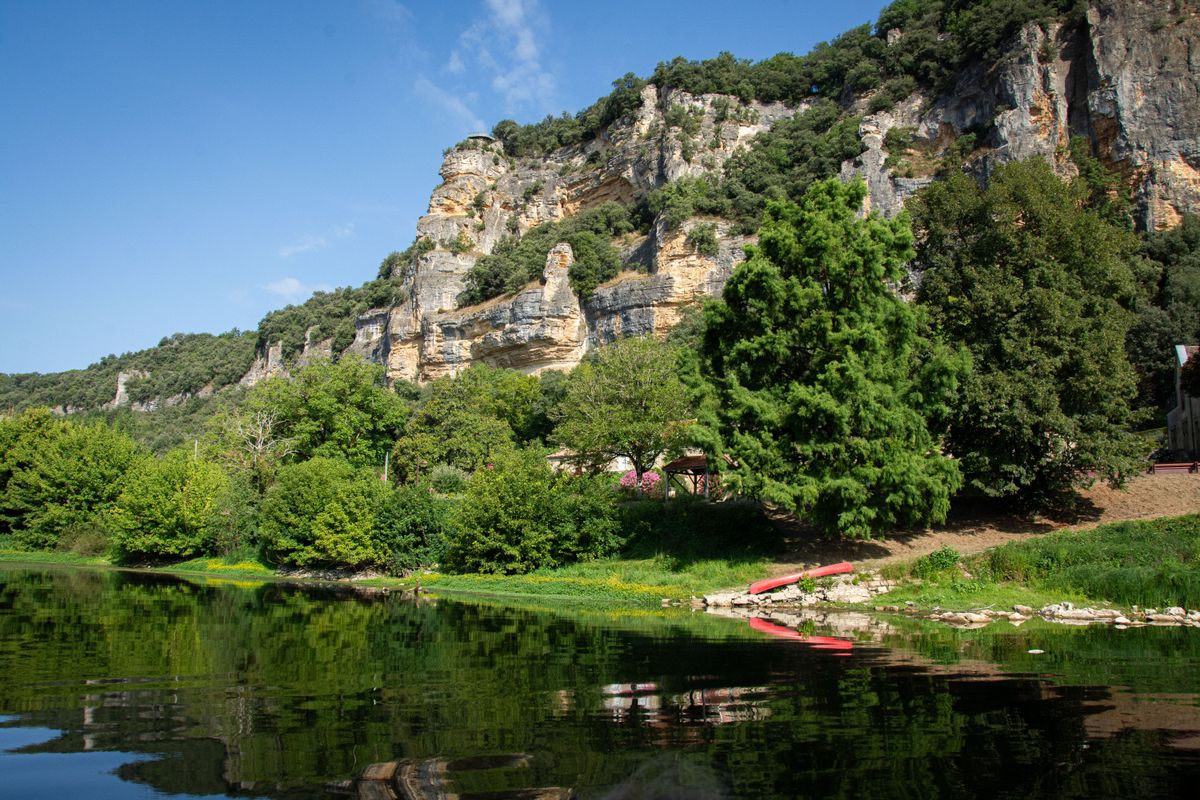
The Glenelg River runs through far south-west Victoria to the sea at Nelson. It is broad and slow for most of its length, crossing flat farmland before it enters the limestone gorge country of Lower Glenelg National Park. The lower river is one of Victoria's best-known multi-day flat-water journeys, and the campsite system gives the trip its shape. Pack light, take several days, and let the river set the pace.
What the river is
The Glenelg is not a technical river. The current is gentle enough that you feel it more than you fight it. The work is paddling, not reading water, and that changes the whole trip. You cover kilometres at a pace that leaves time to watch the cliff walls and pull in wherever something asks for a closer look. The lower gorge gives the river its character. Limestone walls rise straight from the water, and the scale of the country becomes clear in a way the flat paddocks upstream never suggest.
Nelson sits at the river mouth, where the Glenelg meets the estuary and then the sea. Canoe hire operators work out of Nelson, and the township is the usual finishing point for multi-day trips heading downstream.
Why it suits a packraft
A canoe is the traditional craft for the Glenelg, and that creates a logistics problem if you do not own one or have a way to shuttle a large hull. A packraft removes the problem. You carry it in, paddle the river, and roll it into a bag at Nelson. No shuttle vehicle stranded at one end. No hired canoe to return. The trip becomes self-contained in a way a canoe trip rarely is.
The Glenelg suits a touring packraft well. The water is calm, the river is wide, and there are no rapids asking for a technical hull. A solo paddler can run the trip alone without needing a partner to share a tandem canoe. Families with young children have used the campsite system to run easy, short daily stages in tandems.
The campsite system
Designated riverside campsites are the skeleton of a Glenelg River trip. They are spaced along the route and you book them through Parks Victoria before you go. The booking system also sets the rhythm of the journey. You plan your days around the sites, and the sites decide how far you paddle each day. Check Parks Victoria for current availability, booking requirements, fees, and any conditions that apply to your planned route and dates.
The campsite infrastructure makes the Glenelg more approachable than wilderness rivers where you find your own ground each night. It also means you can plan the trip with precision, which matters for groups with children or paddlers on their first multi-day journey.
The gorge
The limestone gorge on the lower Glenelg is the visual heart of the trip. The walls close in on both sides and the river narrows. The stone is pale and textured, cut over a long time by water working through soft rock. The gorge is stiller than the open paddling upstream, and the scale of the walls makes your hull feel small in a way that is more pleasant than alarming.
The gorge is open to paddlers of every level. There is no difficult water, no exposed section, no skill gate. You paddle through it. That is the whole instruction.
Pacing and conditions
With the Glenelg's gentle current, your daily distance comes down almost entirely to how long you paddle. There is no free speed from moving water. On calm mornings the river is glassy and efficient. Wind on the open reaches above the gorge is the main resistance. A headwind on a wide, exposed stretch adds effort and time. Check conditions before each day on the water.
Near Nelson the river turns tidal. Estuary tides shift the water level and the direction of the current in the lower section. Paddling out against a flood tide costs you time, so check the tide before you set out for Nelson. Summer days in the south-west can be clear and warm, and shade on open water is scarce. Sun protection and the water you carry matter more than most paddlers expect on a flat river in mild country.
PFDs are required on the water. The Glenelg is benign compared with technical rivers, but the usual open-water planning applies. Tell someone your itinerary, check Parks Victoria conditions, and carry what you need to manage a day longer than planned.
Who it suits
The Glenelg is a fine first multi-day trip. The water asks nothing technical of you. The campsite system removes the uncertainty of finding a site each evening. The distances are manageable for paddlers who are not yet fit or fast. Families with children in tandems find the short daily stages and flat water a workable combination.
It also suits anyone who wants unhurried days on the water without the logistical weight of a canoe trip. Roll it up, carry it, paddle on. That format fits the river and the trip style precisely, and few rivers match the Seeka Tourer and Duo as well as this one.