
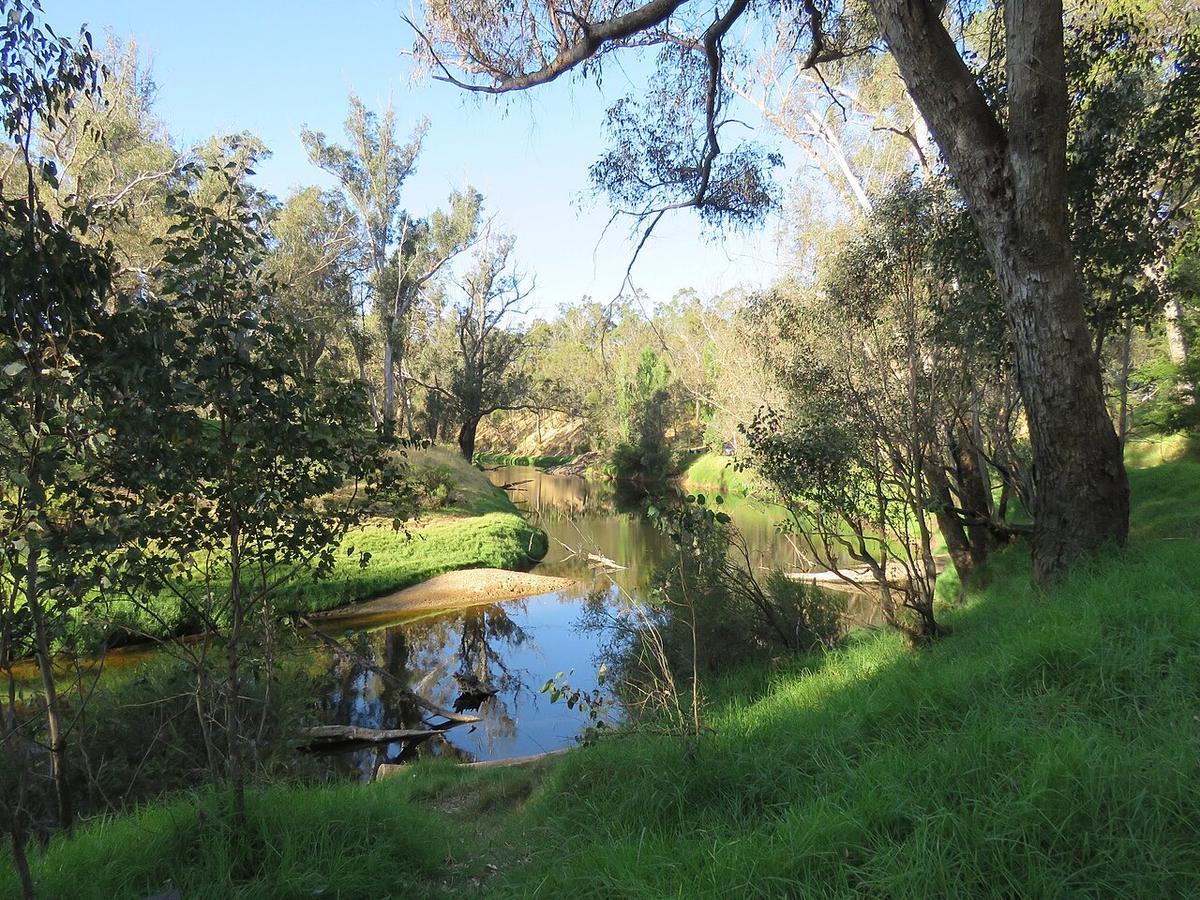
The Blackwood is one of the longest rivers in Western Australia's south-west. It rises in the wheat belt country east of the Darling Scarp and runs west and south through jarrah forest and farm valleys before it meets the sea at Hardy Inlet near Augusta. That distance, and the variety of country it passes through, makes the Blackwood the central canoe touring river of the south-west. Most of its length is gentle moving water, not whitewater. The reward is days of unhurried paddling through changing country, with the sounds of forest instead of traffic.
The river in the south-west
The Blackwood drains a large catchment. It collects rain from inland farming country and feeds it slowly through the forested ranges toward the coast. The result is a river with two distinct characters: the open farm valleys of the upper and middle reaches, and the forested, narrower lower sections approaching the sea. Nannup and Bridgetown are the main towns along the corridor. Both sit close to the water and make natural staging points. Augusta, near the mouth, is the usual finishing point for trips running the full lower section.
The season
The Blackwood is a winter-spring river. Its flow depends on rain, and the south-west's rain falls between May and October. A river that carries a touring paddler comfortably in September may be a string of shallow pools and gravel bars in March. Plan by season, not by date. The practical touring window is typically July through to October or early November. Before you commit to a section, check current river levels and local information. Levels drop fast at the end of the season, and the gap between a good flow report and what you find on the water can be significant.
High winter flows bring their own considerations. Fast water after heavy rain changes the character of the river. Trees and debris move in flood conditions. Watch conditions before you launch and build contingency days into a multi-day itinerary.
The touring pattern
Multi-day trips between the river towns give the Blackwood its natural shape. You set a shuttle between a put-in and a take-out, then run downstream over several days. The banks change as you go. Upper reaches wind between paddocks in open farm country; on the lower sections the forest closes in and the country goes still. They feel like two different trips.
Land status along the river varies between private farmland, state forest and reserves. Campsite options depend on current permissions and what local information recommends. Do not assume access to any bank. Check with local paddling groups or operators who know the current situation before you plan overnight stops. This is not a river with a published campsite system.
The water, plainly
Most of the Blackwood is gentle moving water. You read the current, avoid the snags, and paddle. At moderate flows the river asks little of a touring paddler technically. Even so, a farmland-forest river carries hazards that flat water does not. Submerged logs and fallen trees are the primary risk. Tannin-dark water hides obstacles, and overhanging branches on the outer edge of bends are a constant feature. Slow before a corner you cannot see around and stay off the outer bank.
Some sections carry rapids at higher flows. A gentle chute at moderate water becomes more consequential when the river is running hard. Scout what you cannot see clearly. Portage what you do not want to run. Check current levels and local information for any specific reaches you plan to paddle.
River sense for the south-west
Cold water is the factor most paddlers underestimate. Air temperatures in July and August can feel mild on shore. Water temperatures do not follow. A swim in winter water is a cold shock however short the immersion. Wear appropriate layering under your PFD. A PFD is non-negotiable on moving water. Carry a dry change of clothes sealed against water.
Days are short in mid-winter. Build that into your daily distance and put stops for lunch and scouting into the timing as part of the plan, not as extras. Tannin water from jarrah forest looks dark and can read deeper or shallower than it is. Trust a pole or paddle blade to check depth at any landing you are unsure of.
Who the Blackwood suits
The Blackwood suits touring paddlers who want several days of easy forward movement through varied country. It is not a destination for paddlers chasing whitewater. The river's appeal is its length and the stillness it offers. Families can find workable sections on the gentler reaches at good flows, particularly closer to the main towns where take-out options are more flexible. Less experienced paddlers should stick to moderate flows, choose sections where local information is available, and travel with people who know moving water.
A seasonal touring river of gentle reaches is comfortable Seeka country at the right levels.