
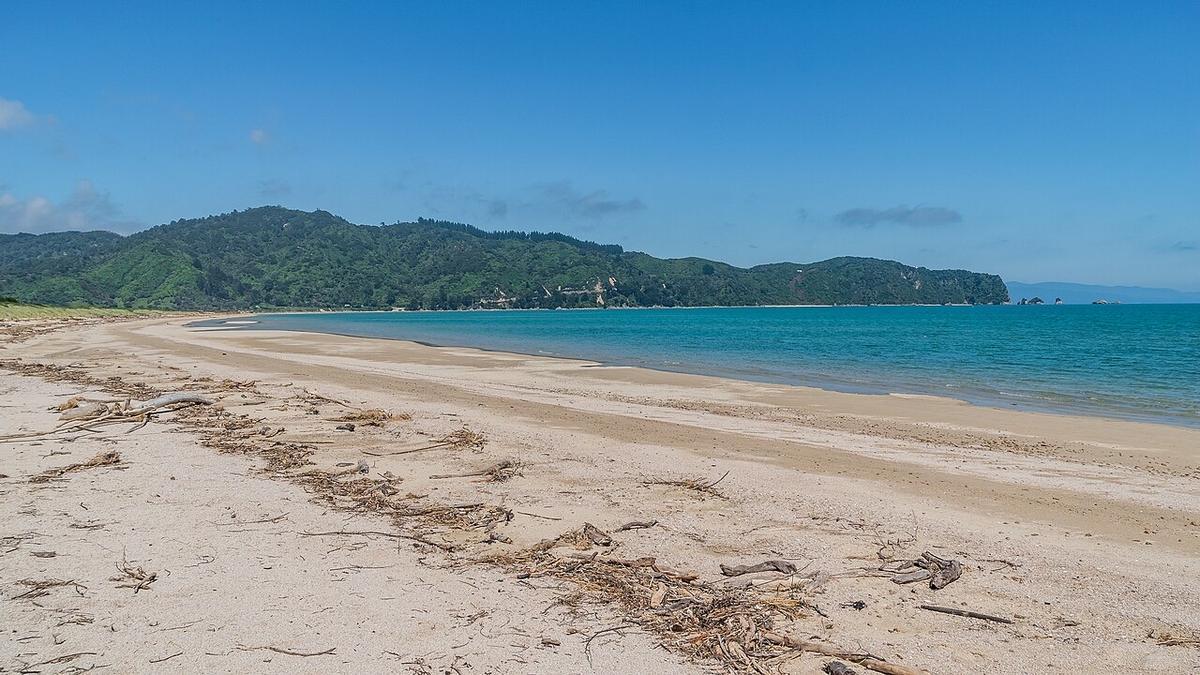
Abel Tasman National Park sits at the top of New Zealand's South Island, where a long coast of golden sand beaches and granite headlands runs between Marahau and Wainui Bay. The Abel Tasman Coast Track follows the whole of it, a Great Walk that moves between forested ridges and sea-level flats, crosses estuaries on the tide and reaches beaches with no road access. Sea kayaks and guided operators have worked this coastline for decades. A packraft plays a different and narrower part here. It rides in the pack, comes out in the calmest inshore corners on the right morning, and always sits second to the track under your feet.
The place
The park hugs a coast that faces Tasman Bay to the east and south. In the right conditions the water in the inlets and behind the headlands can be very calm. The beaches are wide and sheltered enough that sea kayaks launch and land here most days. That is not the same thing as safe for a small inflatable. The sea is still the sea. Tides run through the inlets. A breeze that feels mild on the sand builds chop on the water quickly.
The track links beaches, headlands and estuary crossings across several walking days. DOC huts and campsites sit at regular intervals. Water taxis run from Marahau. They can drop you at any accessible beach, pick you up from any beach, and cover in minutes a section of track that takes a day to walk. They are the safety net and the bail-out. Use them.
The premise
Abel Tasman is sea kayaking country. Commercial operators have decades of experience on this coastline. Guided multi-day kayak trips are available, and they are the right tool for anyone who wants to paddle the full length of the park. The guides know which days are launchable and which are not. They carry the skills and the craft for open-coast paddling.
A packraft is not a sea kayak. It sits low, moves slowly, and has very little reserve if conditions change. The packraft's version of Abel Tasman is not a sea journey. It is a walking trip with a packraft in the pack, brought out for the calm inshore moments: a lagoon at high tide, a flat estuary stretch on a still morning, a sheltered bay before the sea breeze arrives. That is a worthwhile trip in its own right. It is just not what the kayak brochures show.
Tides and estuaries
The Coast Track crosses several tidal estuaries. At low tide you walk across. At high tide the crossings flood and you wait. DOC publishes tide tables and crossing times for each estuary. Check the DOC website before you plan your days, because the tide controls your schedule more than any other variable.
At high tide a packraft can float a calm lagoon or estuary flat while walkers wait on the bank. That is where it justifies its weight on this trip. Not by bypassing the safety guidance, but by giving you a different rhythm at the same crossing. Paddle across at high water, land on the far bank, deflate, keep walking. Check DOC's current guidance on each crossing before you treat any estuary as paddleable. Conditions and access can change.
Reading the day
Morning is the window. On settled days the coast often sits glassy before 9am. On warm days the sea breeze builds from late morning, reliably enough to plan around. By early afternoon, water that looked calm at launch can be carrying chop and whitecaps beyond the headlands.
Offshore wind is the non-negotiable no. It blows away from shore, and a small inflatable in an offshore wind is in serious trouble fast. If the wind is coming off the land, stay on the land. Check the MetService marine forecast before each day on the water. If the forecast shows any offshore component, walk instead. The track is always there.
If the sea has any texture beyond the lightest ripple in a sheltered corner, it is not a packraft day. The rule is simple. The moment conditions are marginal, the answer is no. Cold water and an offshore wind together are not a recoverable situation in a small inflatable.
Logistics
Huts and campsites on the Abel Tasman Coast Track book through DOC online. Book well ahead. The track is one of New Zealand's Great Walks and places sell out months in advance, particularly in summer and over school holidays.
Water taxis depart from Marahau and serve the beaches along the track. Prices and timetables vary by season and operator, so check directly with operators for current rates. Build a water taxi booking into any trip plan. If the sea closes in and you cannot paddle a planned section, a taxi covers the distance safely. They are part of how the track works, not a luxury.
Who it suits
Abel Tasman by packraft suits walkers who want optional water moments, not paddlers planning a sea journey. If your main goal is paddling the Abel Tasman coastline end to end, book with a guided sea kayak operator. They have the right craft and the local knowledge this coastline requires.
If your goal is walking the track with a packraft in the pack for the calm estuaries and the sheltered morning bays, a self-bailing packraft fits that brief. You will carry extra weight and sit out many days on the water. You will walk more than you paddle. On this coast a Seeka is a walker's craft for the calmest corners, and the walking carries the trip.